
Last updated November 4, 2026
 Wrought iron
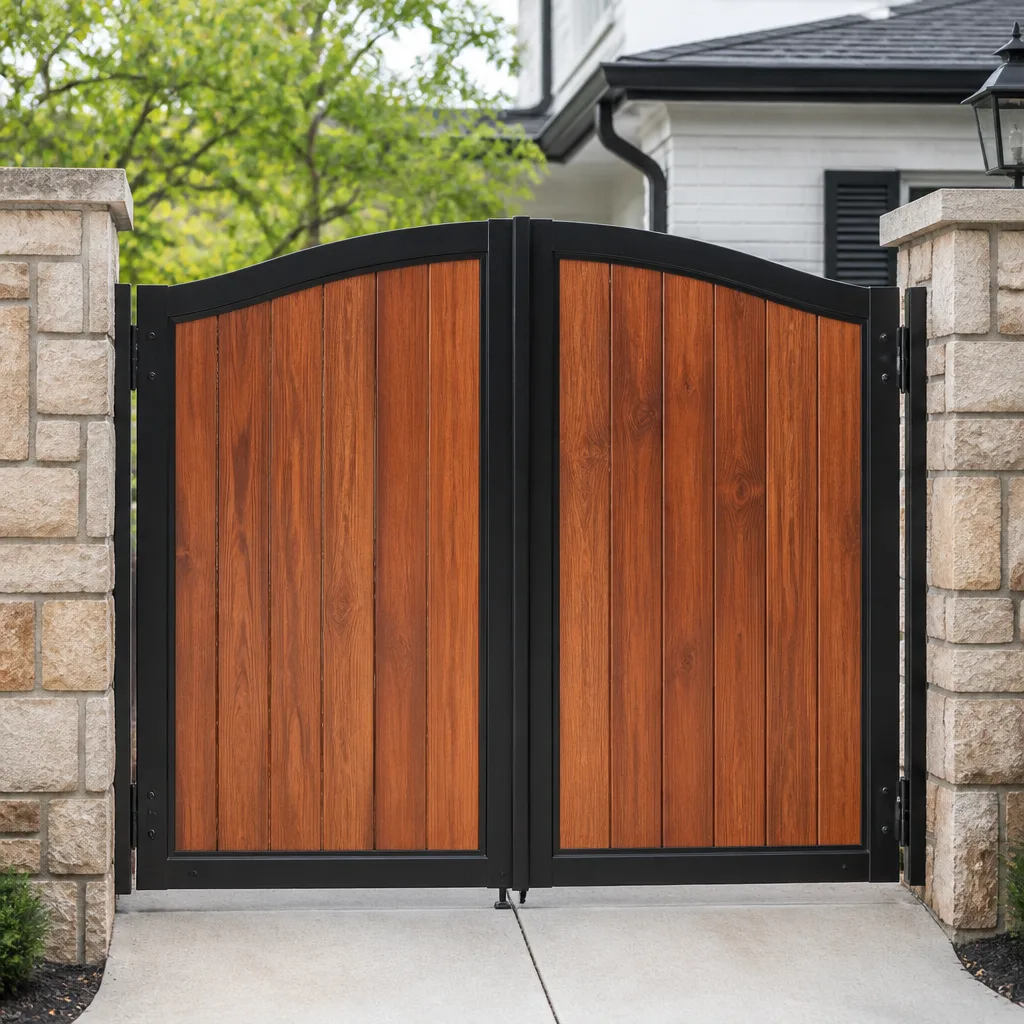 Wood & steel frame
 Farm & ranch
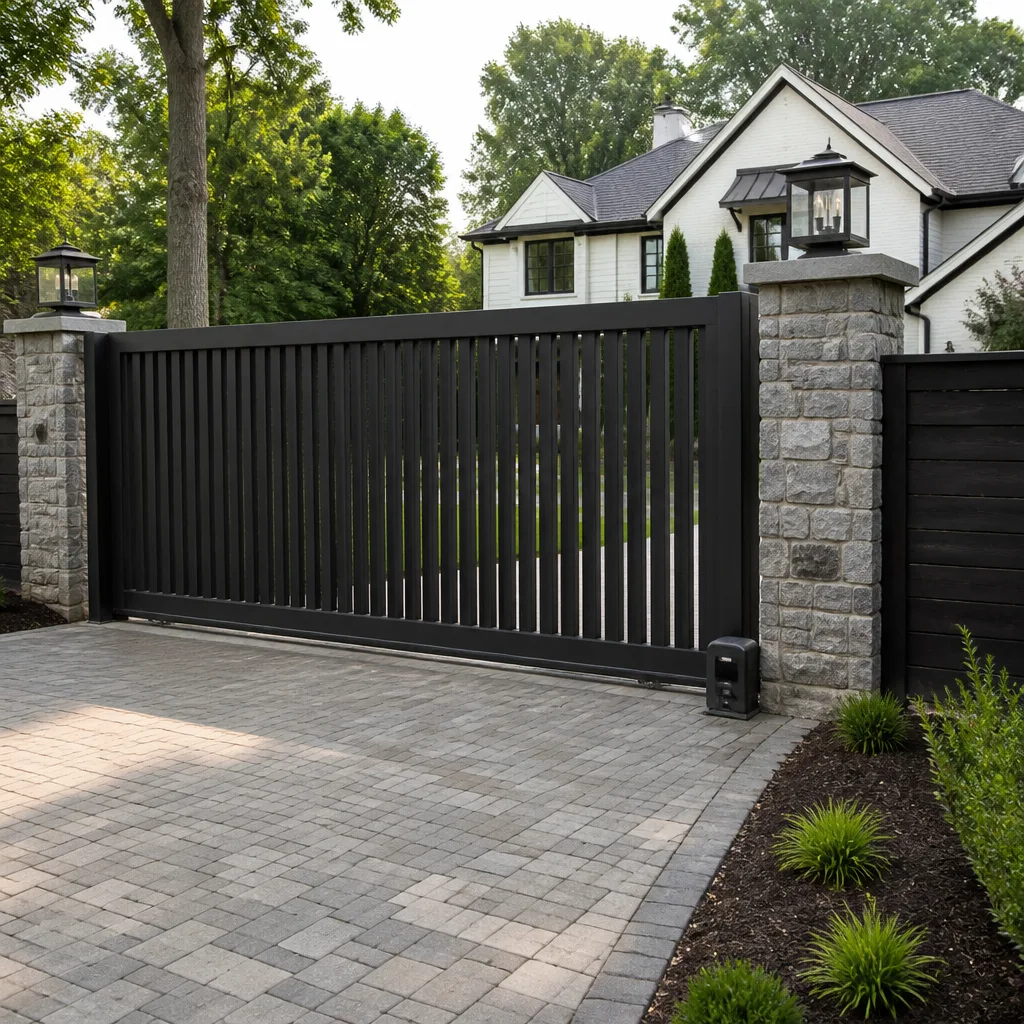 Sliding driveway gates
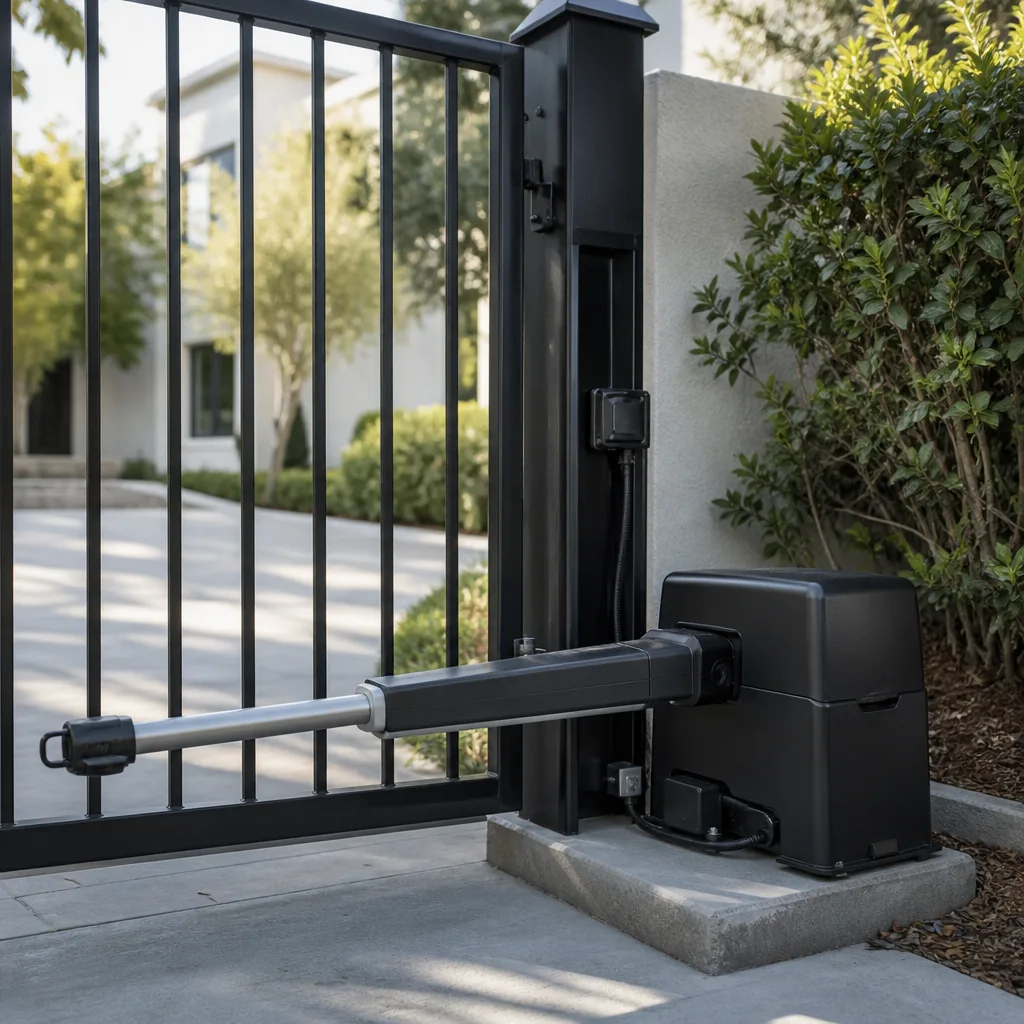 LiftMaster operators
Free on-site gate assessment - hinges, posts, and your LiftMaster or Nice gate operator checked before anything is quoted
The assessment is free and the quote is the invoice.
Get your free estimateDIY vs Professional Gate Repair: The Compton Homeowner’s Decision Guide
The gate repair task that sends the most people to urgent care isn’t electrical. It’s spring adjustment on a counterbalanced slide gate. The stored energy in a compressed gate spring is roughly equivalent to a loaded crossbow, and when that energy releases against a hand or face, the result is a hospital visit, not a fixed gate. Compton homeowners face this decision constantly: grab a wrench and watch a tutorial, or pick up the phone and have a technician who works on gates every day handle it. This guide breaks down which tasks are genuinely owner-safe, which ones carry risk you can’t see until it’s too late, and what each path actually costs in time, money, and downstream trouble.
Quick Answer
DIY gate repair makes sense for low-risk maintenance tasks like lubricating hinges, cleaning photo-eye sensors, and reprogramming remotes. It’s the wrong choice for anything involving spring tension, gate operator wiring, or safety device bypass. In Compton, where most homes have automated driveway gates that get daily use, the cost difference between a botched DIY repair and a professional fix is often two to three times the original repair quote once secondary damage is factored in.
Styles & brands we work with
- Wrought iron
- Wood & steel frame
- Farm & ranch
- Sliding driveway gates
- LiftMaster operators
Table of Contents
- Owner-Safe Tasks: What You Can Actually Fix Yourself
- Leave It to a Pro: The Three Risk Categories
- Hidden Risks Nobody Talks About in Gate Repair
- How DIY Work Affects Your Gate Warranty
- The Real Cost Comparison: DIY vs Professional, Line by Line
- What to Do Between Noticing the Problem and Getting Help
- How to Choose the Right Gate Technician in Compton
Owner-Safe Tasks: What You Can Actually Fix Yourself
Some gate maintenance is genuinely within reach for a careful homeowner. These tasks require no specialized tools, no wiring knowledge, and no exposure to stored mechanical energy. We tell Compton homeowners to think of these the way you think of changing a car’s air filter: it’s maintenance, not repair, and the downside risk is minimal if you pay attention to what you’re doing.
Here’s what you can safely handle on your own:
- Lubricating hinges and rollers – A silicone-based lubricant on metal-on-metal pivot points keeps a manual or automated gate moving smoothly. Do this two or three times a year in Compton’s dry climate, where dust accelerates wear on unlubricated parts.
- Cleaning photo-eye sensors – If your gate reverses or refuses to close, the safety sensors at the base of the gate posts are often just dirty. Wipe them with a dry cloth. This fixes a surprising number of “broken” gates.
- Reprogramming remotes – Most gate operators from brands like LiftMaster, FAAC, and Linear have straightforward remote sync procedures in the manual. If you still have the manual, this is a ten-minute task.
- Visual inspections – Walk the gate track monthly. Look for debris accumulation, loose bolts you can reach without tensioning anything, and signs of rust or worn wheels. Catching wear early means a smaller repair later.
- Checking battery backups – If your operator has a backup battery, test it quarterly by unplugging the operator briefly. A dead backup battery is a simple replacement, not a service call.
These tasks share a common trait: none of them involve springs, wiring, or the gate’s structural support. If you’re doing something that requires loosening a bolt under tension or touching any wire inside the operator housing, you’ve crossed into different territory. That line matters more than most homeowners realize.
Compton properties tend to have heavier gates than the national average, partly because driveway gates here often double as security barriers rather than decorative entry features. A steel gate panel that weighs 400 pounds behaves differently on its hinges than a lightweight aluminum gate. Even lubrication requires you to understand where the pinch points are when you’re reaching around a moving panel.
Leave It to a Pro: The Three Risk Categories
Professional gate repair exists for a reason, and that reason can be sorted into three buckets: stored energy, live electricity, and liability. Each one has failure modes that aren’t obvious from the outside.
1. Stored Mechanical Energy
Counterbalanced slide gates, which are common on Compton residential properties with long driveways, use heavy compression springs to offset the gate’s weight. Those springs hold enormous force even when the gate is stationary. A homeowner who removes a spring retaining bolt without securing the spring first is essentially releasing that energy without knowing where it will go. The gate may not even move when it happens – the spring, or the bolt, or a fragment of the housing is what moves, and it moves fast.
This is why spring work is never owner-safe. It’s also why professional technicians approach spring adjustment with a healthy respect that comes from working on gates from nine different brands, each with its own spring configuration and tension specification.
2. Electrical Work in a Mixed-Voltage Enclosure
Automated gate operators contain both low-voltage control wiring and line-voltage power wiring in the same enclosure. The control board might run on 24 volts, safe to touch. The power supply feeding that board carries 120 volts, which is not safe to touch. A homeowner troubleshooting a gate that won’t respond may open the enclosure, see the clean low-voltage board, and never register that the thick wires entering from the conduit are live. This is how electrical gate repair goes wrong even for people who’ve done basic household wiring before.
Never open the operator enclosure with the power on unless you have the training to identify which conductors are live. If you’re not certain, cut power at the breaker and verify with a tester before touching anything. And if any of that sentence made you uncomfortable, that’s the signal to call someone who does electric gate repair as their primary trade.
3. Liability for a Gate That Fails
Gate safety devices exist because gates injure people. Photo-eyes, edge sensors, and auto-reverse mechanisms are not optional accessories – they’re the difference between a gate that stops for a child and a gate that doesn’t. If you bypass a sensor or adjust the force limit so the gate closes harder, and someone is hurt as a result, you own that outcome. Homeowners insurance may not cover a claim that stems from unauthorized modification of a safety device.
Compton, like most California cities, has its own permitting expectations for gate work that involves structural changes or significant electrical modification. We always recommend checking with the city’s building department before starting any job that changes how the gate mounts, how it’s powered, or what safety systems it uses.
Hidden Risks Nobody Talks About in Gate Repair
Every trade has risks that are obvious from the outside and risks that only reveal themselves after you’re already committed. Gate work has more of the second kind than most homeowners expect. Here’s what separates a frustrating Saturday from a dangerous one.
The 24V vs. 120V problem we already mentioned is the biggest one. You can’t tell from looking which wires are control wiring and which are power distribution. In many operator enclosures, they’re bundled together and the color coding isn’t standardized across brands. What’s blue in a BFT operator might be red in a Viking, which is exactly why brand-specific diagnostic knowledge matters.
Gate weight is deceiving. A gate that slides easily on its track still weighs hundreds of pounds. If it comes off the track during a repair – which happens when bolts are removed in the wrong order – the panel falls sideways or backward, not straight down. You can’t catch it. You can only move out of the way, and you may not have time.
The gate operator’s force setting is a safety calibration, not a convenience setting. When a technician adjusts the closing force on a gate operator, they’re setting it so the gate has enough power to close against wind but not enough to injure someone in its path. Setting it too high to “fix” a gate that reverses on its own isn’t a repair. It’s defeating a safety system. That gate may now injure someone while appearing to work correctly.
Compton’s heat affects gate hardware differently than coastal California weather. We don’t deal with salt air here – this isn’t Long Beach or San Pedro. We deal with heat, dust, and the expansion and contraction of metal over a wide temperature range. Gates that work perfectly in May may bind in August because the track expanded and shifted. A DIY fix that shaves a stuck wheel down may work until winter arrives and the metal contracts, leaving the gate wobbly on a shorter wheel. Professional repairs account for these seasonal cycles in Compton specifically.
How DIY Work Affects Your Gate Warranty
This is the question most guides skip, and it’s the one that costs homeowners the most when they get it wrong. Most gate operator manufacturers – including FAAC, BFT, Linear, and Viking, which are common brands we service in Compton – write their warranty terms around the assumption that qualified hands will do installation and repair work.
Here’s what typically happens when a homeowner attempts a repair and it goes wrong:
- The original problem remains unfixed because the root cause wasn’t actually diagnosed.
- Secondary damage occurs during the DIY attempt – a stripped mounting bolt, a burned control board from a crossed wire, a bent track roller.
- The homeowner calls a professional, who diagnoses both the original issue and the new damage.
- The manufacturer warranty claim is submitted and denied because the operator shows evidence of unauthorized modification or repair.
- The homeowner pays full retail for what would have been a covered part, plus labor, plus the cost of undoing the original mistake.
The warranty question isn’t whether the manufacturer will know – many operators log fault codes and board-level events that make unauthorized intervention detectable. The question is whether the money saved on the DIY attempt is worth the risk of converting a warranty repair into an out-of-pocket replacement.
That math rarely works in the homeowner’s favor. A $40 part replaced incorrectly can void coverage on a $600 control board. We’ve seen operators from every brand we service arrive at our shop with the unmistakable signature of a homeowner repair attempt: stripped screw heads, spliced wires with the wrong gauge, and force settings that were adjusted with no understanding of the safety implications.
The Real Cost Comparison: DIY vs Professional, Line by Line
The honest answer to “is DIY cheaper?” is: it depends on which repair, and it depends on whether you get it right the first time. Here’s how the math actually breaks down for a typical automated gate maintenance issue in the Compton market.
Scenario 1: Replacing a Remote Control
- DIY: $25-$45 for a compatible remote, 15 minutes of programming. Total: under $50 and done.
- Professional: $75-$120 including the remote and a technician visit to program all existing remotes. Total: $75-$120.
- Winner: DIY, clearly. This is owner-safe work.
Scenario 2: Gate Won’t Open or Close Fully
- DIY: Clean photo-eye sensors ($0-$10 for cleaning supplies), check for track debris (free), attempt force limit adjustment without proper calibration (risk of safety compromise). If it works: $10. If it doesn’t and you’ve changed settings: you’ve created a more complex problem.
- Professional: $85-$250 typical for diagnosis and repair, depending on whether the issue is sensor alignment, track obstruction, or operator logic. Most residential electric gate repairs land in the $150-$250 range in Compton.
- Winner: DIY for sensor cleaning only. Professional for anything involving operator settings or wiring.
Scenario 3: Spring Adjustment on a Slide Gate
- DIY: Parts cost is near zero. Risk cost is uninsurable. $0 if nothing goes wrong. Emergency room deductible if it does.
- Professional: $150-$300 for spring adjustment on a residential slide gate, depending on the gate weight and spring condition. This is flat-rate work quoted before the job starts.
- Winner: Professional, always. There is no version of this task where the savings justify the exposure.
The pattern here is consistent: DIY wins on accessories and cleaning, professional wins on structural, mechanical, and electrical work. And notice that professional pricing is not dramatically higher for small jobs. The real cost of DIY isn’t the first repair attempt. It’s the repair attempt plus the follow-up professional visit to fix both the original problem and the new one.
What to Do Between Noticing the Problem and Getting Help
When a gate fails, the gap between “this isn’t working” and “the technician is here” can be hours or a day. What you do in that window determines whether a $100 repair stays a $100 repair or becomes a $600 replacement. These steps prevent minor failures from becoming major ones.
- Secure the gate in an open or closed position. If the gate is partially open and binding, don’t force it. Chock the wheels so it can’t slide unexpectedly, or disconnect the operator per the manual’s instructions and move the gate manually if it’s safe to do so. Forcing a bound gate bends track and breaks rollers.
- Cut power to the operator if anything smells burnt or if you see smoke. Don’t investigate further. A burnt smell means something electrical failed, and that failure may have left live conductors exposed inside the enclosure. Flip the breaker and leave it off until a technician arrives.
- Take photos and notes. What was the gate doing when it failed? Was it making a new noise? Did it work after rain or during a hot afternoon? These details help a technician diagnose faster, which means less billable time.
- Don’t try one more thing. The temptation to tap the motor, wiggle the wiring, or force the gate open “just to see” is how minor electrical failures become major board replacements. After you’ve done the safe basics – cleaned sensors, checked the breaker, tested the remote battery – stop.
- Call a gate-specific contractor. General handymen will take gate work as a small job alongside a dozen other trades. A gate specialist diagnoses faster because this is all they see. The difference in outcome on an automated gate failure is usually the difference between a repair and a replacement.
How to Choose the Right Gate Technician in Compton
Not every gate repair company is the same, and the differences matter more when you’re choosing someone to work on a system that controls access to your property. Here’s what we tell homeowners to look for.
Brand familiarity with what you actually have. Gate operators are proprietary systems in many ways. The diagnostic logic for a LiftMaster isn’t the same as for a FAAC, and a technician who only knows one brand will default to replacing unfamiliar equipment rather than fixing it. We work on all nine major gate brands – LiftMaster, FAAC, BFT, Linear, Viking, Ghost Controls, DoorKing, Elite, and Mighty Mule – because Compton’s existing gates come from every manufacturer, and homeowners shouldn’t have to replace a good operator just because their service provider doesn’t know that brand’s fault codes. That brand-agnostic approach is rare in this industry, and it’s the reason our Gate Repair Compton work skews toward repair first.
Gate-only focus. If a company also does plumbing, roofing, and general handyman work, gates are a side business. Gate repair is all we do. The tools, parts inventory, and diagnostic knowledge that a gate-only shop builds over years of focused work can’t be replicated by a generalist who touches four different trades in a single day.
Repair-first philosophy. Some companies push replacement because it’s more profitable than a targeted repair. We lead with repair because most gates can be fixed, and most homeowners prefer a $200 repair to a $2,000 replacement. The companies that push new installations without exhausting repair options are honest about their priorities, whether they mean to be or not.
Full life-cycle capability. The right contractor can fix your existing gate today and install a new one when the time comes. That continuity matters because the technician who has serviced your old gate knows the site conditions, the wiring, and the access control setup before the first day of a new installation. Automated or manual, we handle the full range, from a single broken hinge to a full electric-gate installation.
Common Mistakes to Avoid
- Using WD-40 on gate hinges. WD-40 is a water displacer, not a lubricant. It cleans, then it dries, and the hinge is left less lubricated than before. Use a silicone or lithium-based lubricant meant for metal pivot points.
- Adjusting the closing force to “fix” a gate that reverses. A gate that reverses midway through closing is telling you something: a sensor is obstructed, a wheel is binding, or the track has debris. Raising the force limit overrides a safety system. That’s not a repair.
- Replacing the operator before checking the gate itself. Operators rarely fail in a vacuum. If the gate was hard to move before the operator stopped working, the operator was working against a failing gate. New operators die fast on bad gates. Diagnose the mechanical side first.
- Buying the cheapest compatible remote on Amazon. Compatibility claims from third-party remote sellers are frequently wrong, especially for BFT and Viking systems. The remote pairs, then stops working within weeks. Buy from the manufacturer or a gate supplier who stands behind the part.
- Ignoring unusual noises for weeks. A grinding sound, a squeal, a clunk – these are a gate’s early warning system. What starts as a $50 roller replacement becomes a $300 track repair if it’s run for a month while it’s binding.
- Working on a gate operator without verifying power is off. Flipping the switch on the operator itself doesn’t always cut power to the line-voltage terminals inside. Use the breaker, verify with a tester, and if you don’t have a tester, don’t open the enclosure.
- Not asking about permits before structural gate work in Compton. Compton has its own building department and its own requirements. A contractor who can’t answer a straight question about permitting for structural gate modifications is guessing. Ask before you sign.
See the difference
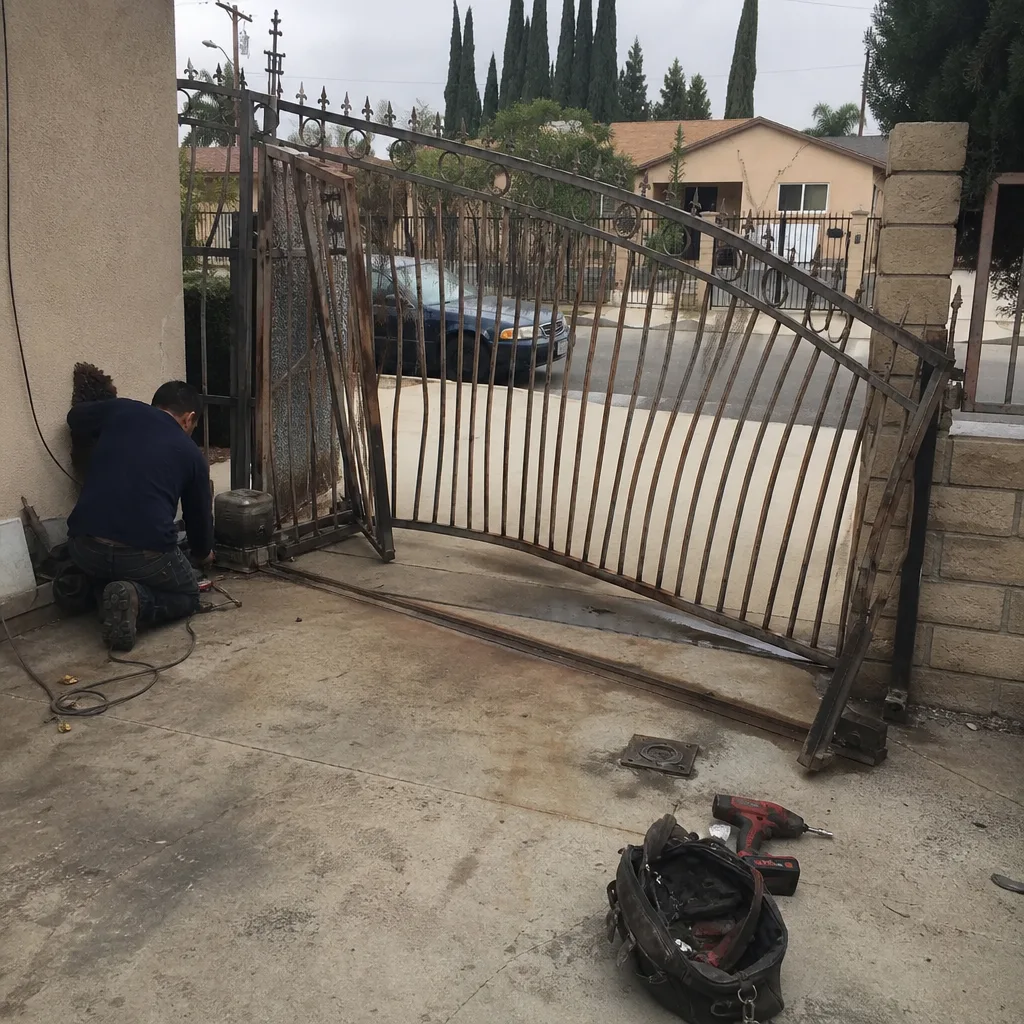 Before
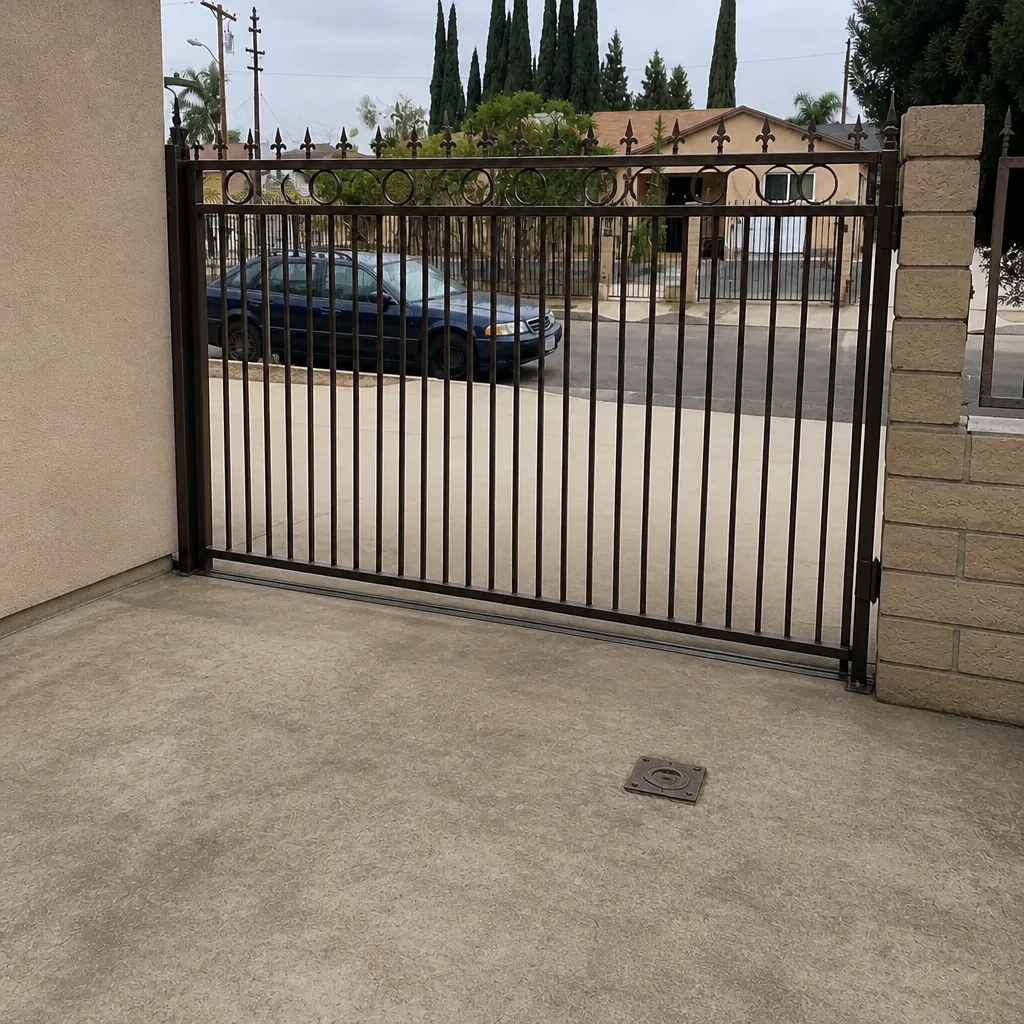 After
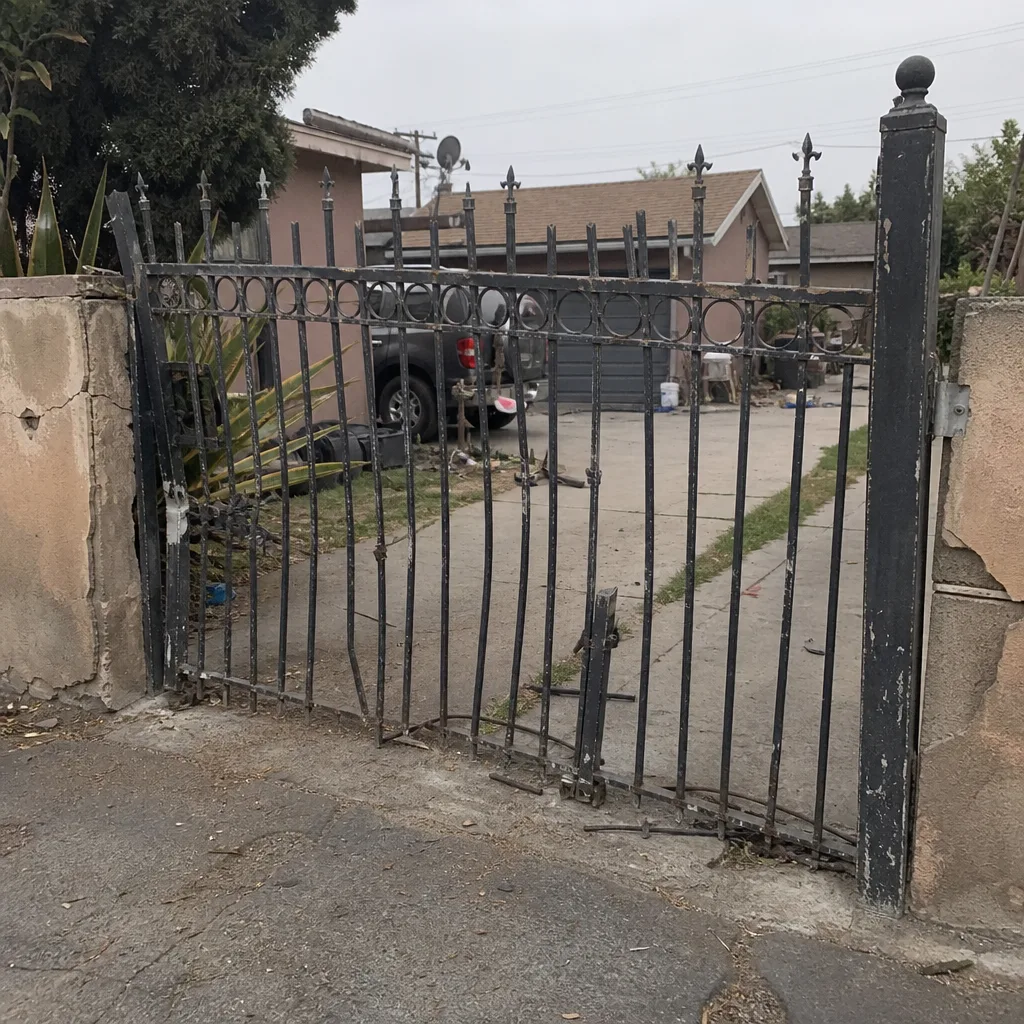 Before
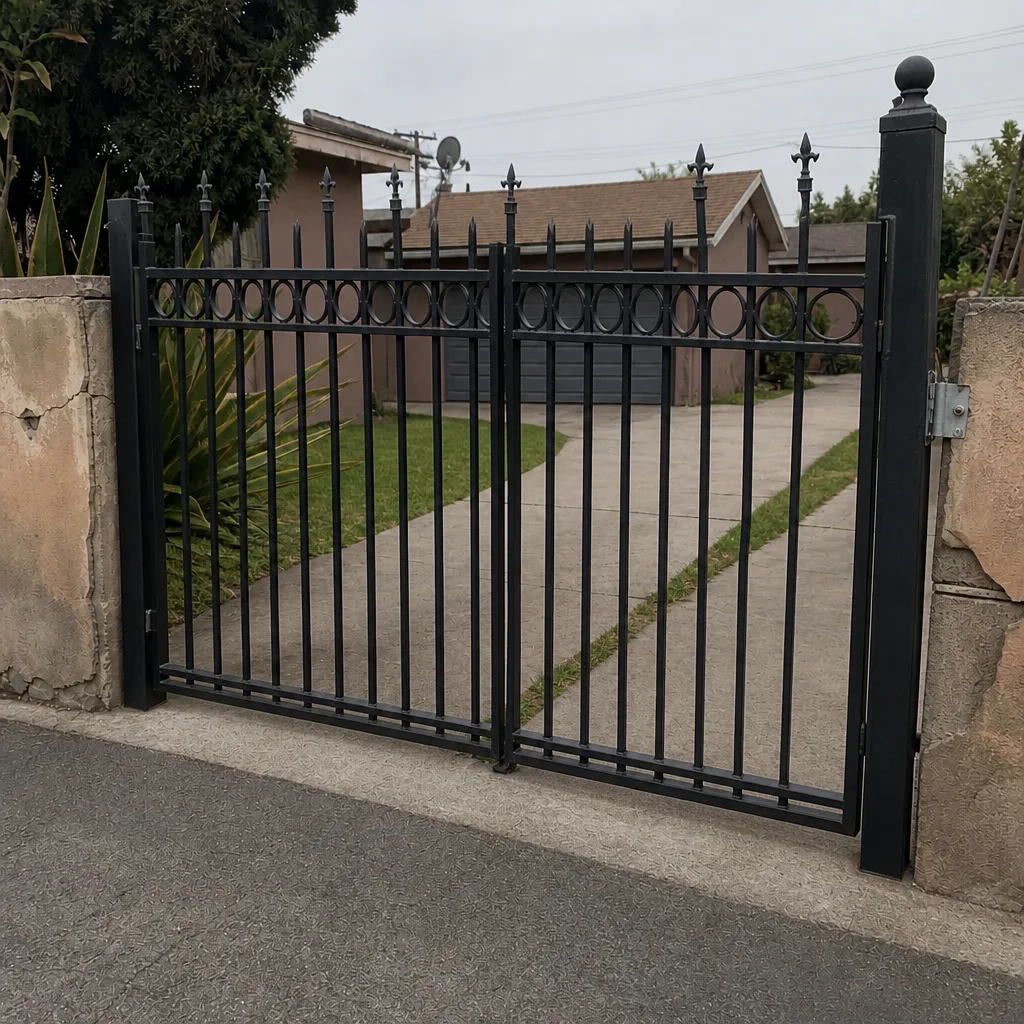 After
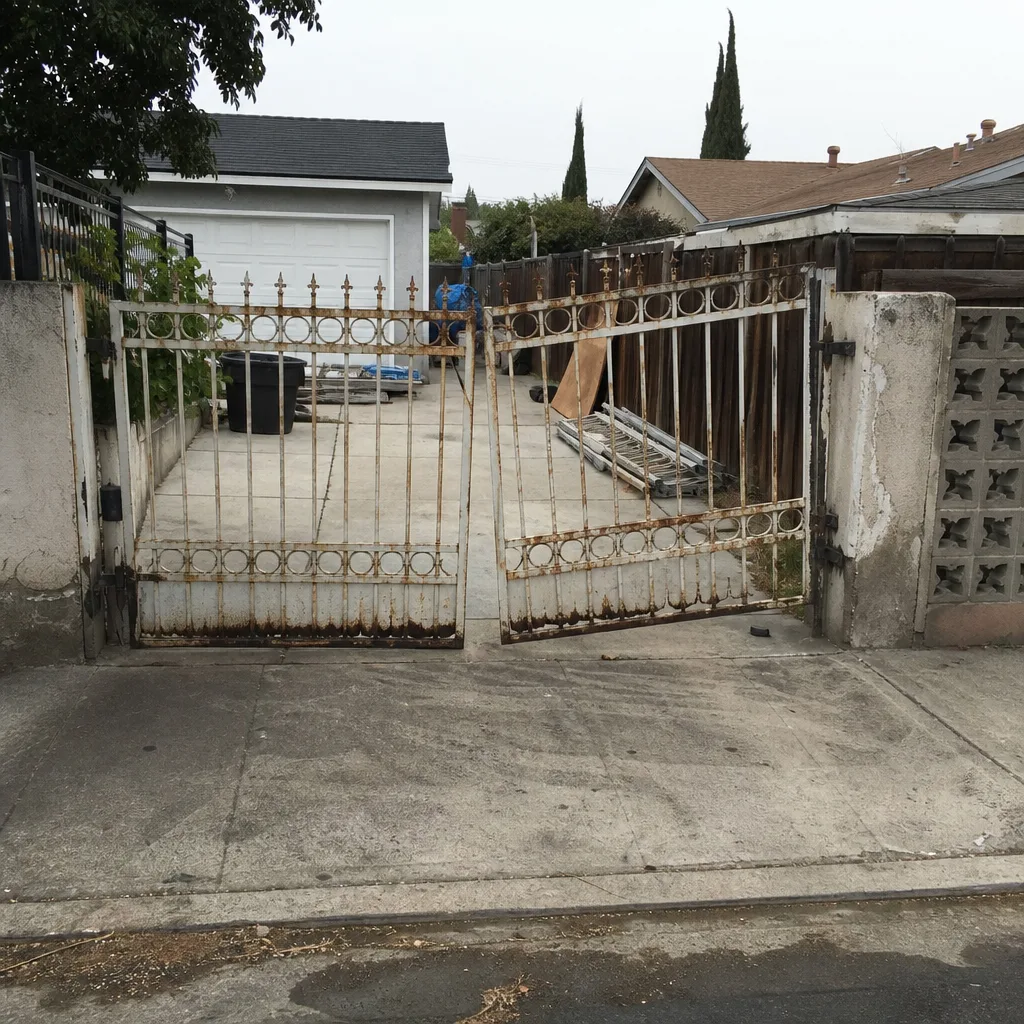 Before
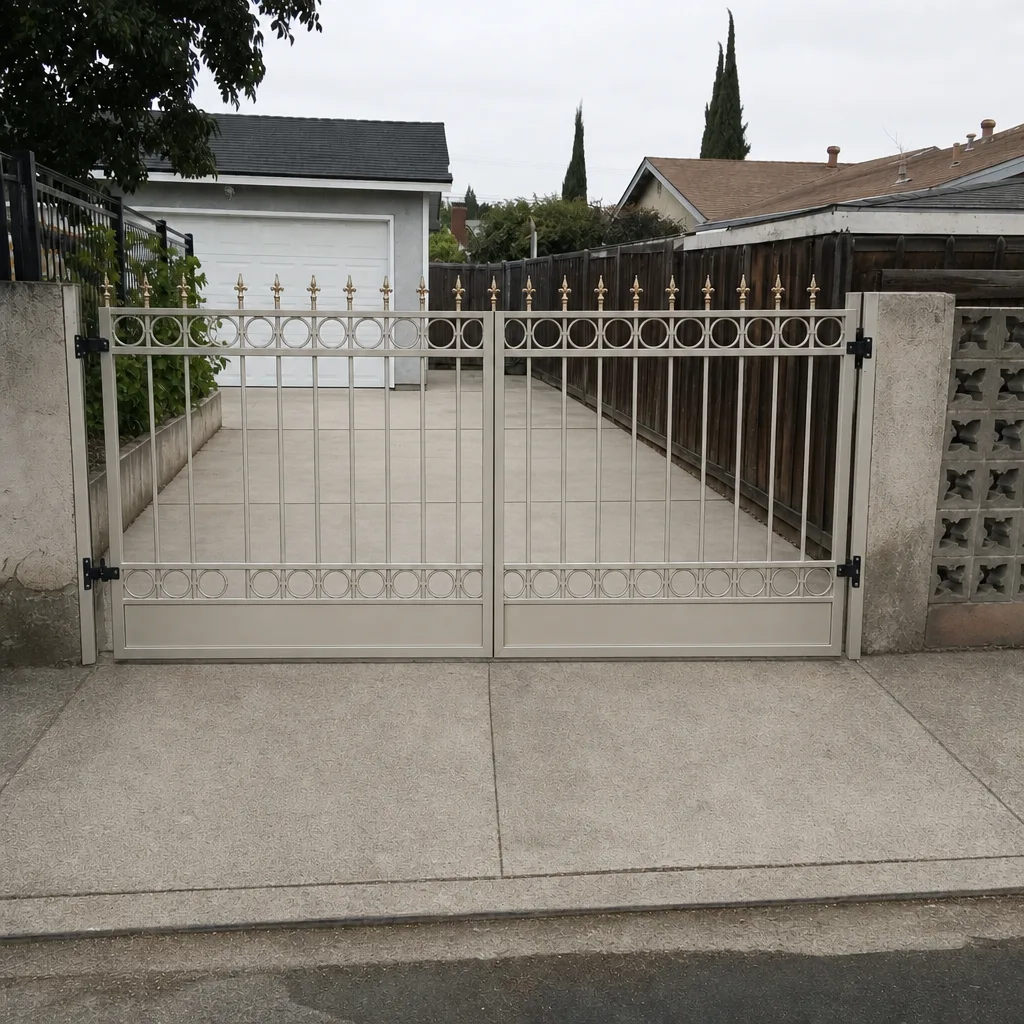 After
When to Call a Professional
Call a professional if your gate has come off its track, if the operator is making electrical sounds or burning smells, if a spring or cable has failed on a counterbalanced gate, or if the gate has hit a vehicle or a person and you’re not sure the safety systems are still functioning. Call if the gate reverses on its own and cleaning the photo-eyes didn’t fix it. Call if you’ve lost remotes and need the system reprogrammed for security. These are not edge cases. They’re the majority of service calls we see on Compton properties, and each one is a scenario where the cost of a professional repair is lower than the expected cost of a failed DIY attempt followed by an emergency fix.
Gate Repair Compton offers free estimates in Compton. Call (866) 569-6161. We answer 24/7. Fast dispatch from 7am to 7pm, Sunday through Friday. The price is quoted and agreed before any work starts, and the written estimate sets the final number.
Frequently Asked Questions
You can fix an opener by replacing batteries in the remote, reprogramming a remote that’s lost its sync, and cleaning the photo-eye sensors. You should not attempt to repair the opener’s internal wiring, control board, or motor components. Those repairs require opening an enclosure that contains both low-voltage and line-voltage circuits, and the distinction is not always visually obvious.
Most residential gate repairs in Compton range from $85 to $300, with simple fixes like sensor realignment or remote programming at the lower end and spring work or control board replacement at the higher end. Full operator replacements run higher, typically $800 and up depending on the brand and the gate’s size. The written estimate sets the exact price before work begins.
Yes, lubrication is owner-safe work. Use a silicone-based spray on hinges, rollers, and pivot points. Stay clear of the gate’s pinch points while it moves, and don’t reach through the gate panel to lubricate the back side while the gate is operating.
A gate that reverses during closing is usually responding to an obstructed or dirty photo-eye sensor. Clean both sensors with a dry cloth and check that they’re aligned. If the problem persists, the issue may be a binding wheel or track obstruction, which creates enough resistance to trigger the operator’s safety reverse. That’s a repair job, not a settings adjustment.
A general handyman can handle basic mechanical fixes like tightening visible bolts or lubricating hinges. Electric gate repair on automated systems calls for someone who works on gate operators regularly. The fault codes, wiring configurations, and safety calibrations are brand-specific, and a technician who knows your brand’s logic will get it right faster.
Call (866) 569-6161. We answer 24/7. Fast dispatch from 7am to 7pm, Sunday through Friday. Same-day service is available when the schedule allows, and all estimates are free.
The Bottom Line
The DIY vs professional decision for gate repair comes down to one question: does this task involve stored energy, live electricity, or a safety system calibration? If the answer is no – if you’re cleaning, lubricating, reprogramming, or inspecting – you can handle it with basic care. If the answer is yes, the money you save by doing it yourself is a rounding error compared to what a mistake costs. Compton homeowners deal with gate issues constantly because automated driveway gates are standard here, not a luxury feature. Having a gate specialist who knows the brands, knows this climate, and knows what a Compton gate looks like after years of daily use is worth more than any tutorial video. Call (866) 569-6161 for a free estimate. We answer 24/7. Fast dispatch from 7am to 7pm, Sunday through Friday.
Written by the team at Gate Repair Compton, serving Compton since 2014.