
Last updated November 4, 2026
 Wrought iron
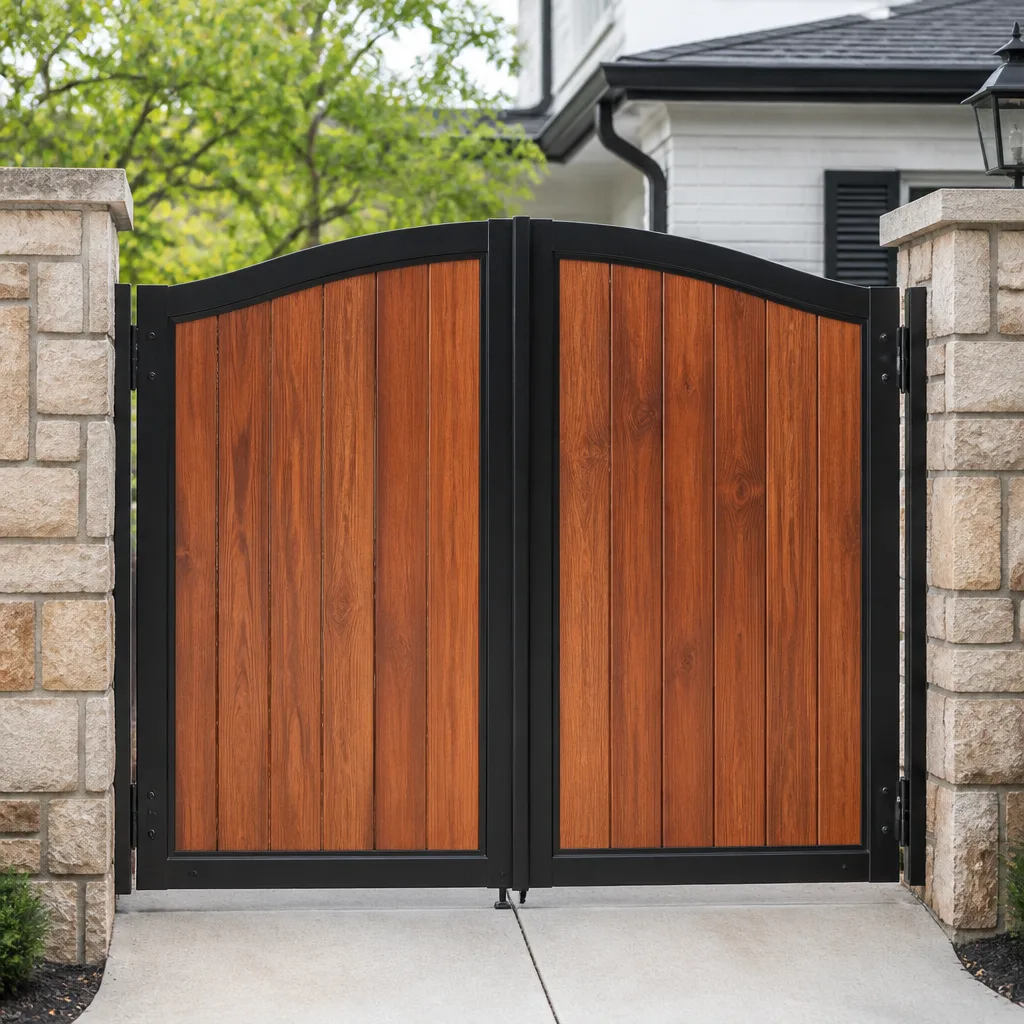 Wood & steel frame
 Farm & ranch
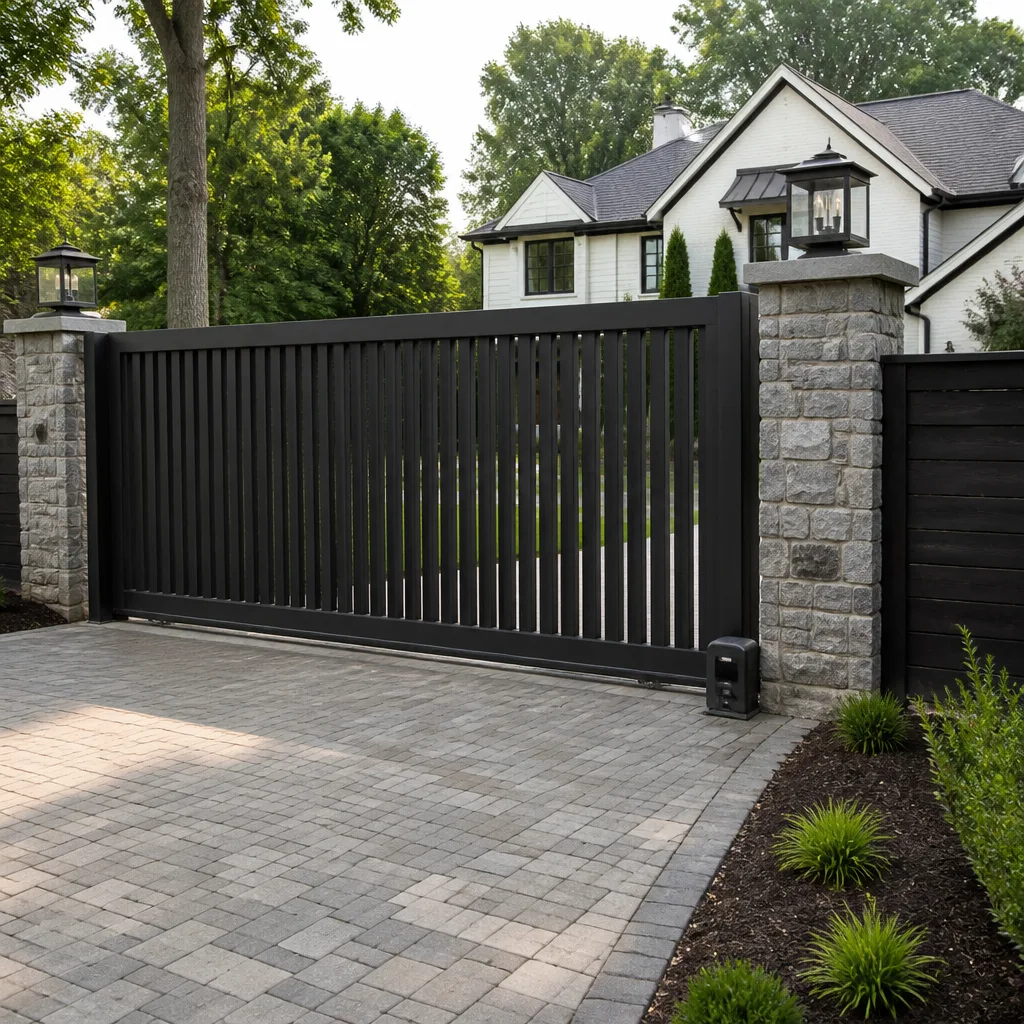 Sliding driveway gates
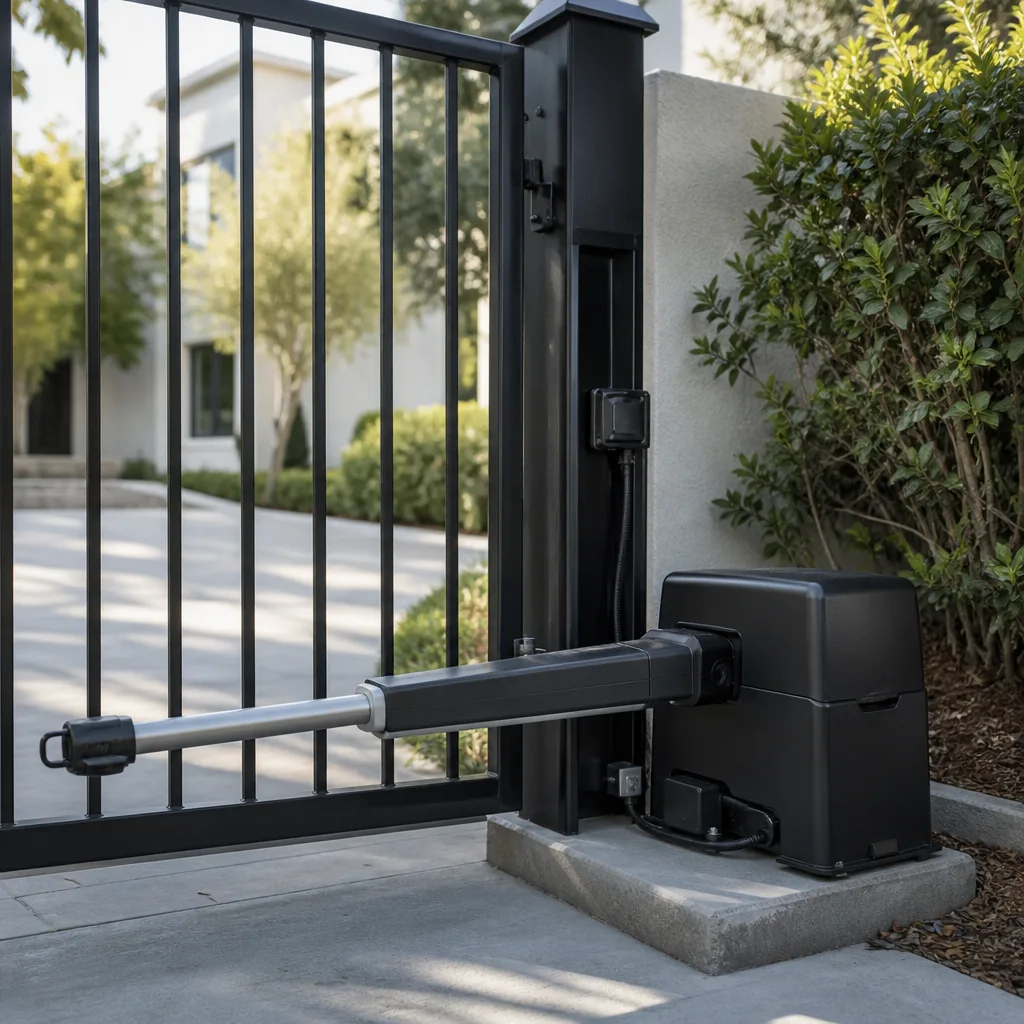 LiftMaster operators
Free on-site gate assessment - hinges, posts, and your LiftMaster or Nice gate operator checked before anything is quoted
The assessment is free and the quote is the invoice.
Get your free estimateGate Repair Emergency Preparedness Guide for Compton Homes
Most Compton property owners discover their gate has no manual override at the exact moment they need it most. A power outage hits, the operator goes silent, and a car is trapped in the driveway with the gate sealed shut. Nobody reads the manual ahead of time, and nobody walks the perimeter to locate the release mechanism before something breaks. That’s how a ten-minute fix becomes an all-night ordeal. This guide maps out the two main failure states, walks through manual release procedures for the operator brands most common in Compton, and shows you what to have ready before you ever need to make an emergency call.
Quick Answer
The right emergency response depends on which way your gate failed. A gate stuck open is a security problem that needs an immediate barricade or temporary lock; a gate stuck closed is an access problem that usually has a manual release solution. Either way, the first step is knowing your operator brand and where the manual release is located before you need it.
Styles & brands we work with
- Wrought iron
- Wood & steel frame
- Farm & ranch
- Sliding driveway gates
- LiftMaster operators
Table of Contents
- The Two Failure States: Open vs. Closed
- How to Manually Release Your Gate Operator
- The Five-Minute Diagnosis: Electrical, Mechanical, or Structural
- What to Have Ready Before You Call
- Building a Gate Emergency Kit
- Power Outages and Backup Access in Compton
- Common Mistakes to Avoid
- When to Call a Professional
The Two Failure States: Open vs. Closed
Every gate failure falls into one of two categories, and they demand completely different responses. Understanding which one you’re facing is the first decision point in any emergency.
A gate stuck in the closed position is a property access problem. You can’t get your car in or out, deliveries can’t reach your door, and if the gate is your only vehicle entry point, you’re effectively landlocked until the issue is resolved. The good news is that most closed-position failures have a manual release that lets you swing or slide the gate open by hand. You lose automation, but you regain access.
A gate stuck in the open position is a different animal entirely. This is a security crisis, not an inconvenience. An open gate on a Compton property signals to anyone passing by that the perimeter is compromised. Trailers, tools, vehicles, and interiors become visible and accessible. If your gate fails open at night, you have a serious exposure until it’s secured. The interim fix is usually a temporary lock, chain, or physical barricade, plus shutting off the operator so it doesn’t try to cycle and cause further damage.
The urgency levels are not equal. A closed gate failure during Gate Repair Compton service hours is a scheduling problem. A gate stuck open at 11pm is an active security exposure. Knowing which failure you have, and roughly what caused it, determines whether you’re calling for a same-day appointment or needing immediate dispatch.
How to Manually Release Your Gate Operator
Every automated gate operator with a motor-driven arm, chain, or piston has a manual release mechanism. The exact location and operation varies by brand, but the principle is the same: you’re disconnecting the gate leaf from the motor so it can move freely by hand. Here’s the catch. If you don’t know where the release is and how it works before the power goes out, you’ll be fumbling in the dark with a phone flashlight and a rising sense of panic.
Why the Release Matters
The manual release is not just for emergencies. It’s also the first thing a technician checks when diagnosing why an automated system won’t cycle. A release that’s been forced, mis-set, or left disengaged after a previous repair is one of the most common causes of a gate that won’t open or close on its own. The operator is running, but the gate isn’t connected to it.
Brand-Specific Release Locations
Here’s where the release typically sits on the major operator types we see in Compton. These are general patterns across each brand’s product lines, not one-size-fits-all instructions. Your specific model may vary.
- LiftMaster: Most LiftMaster swing and slide operators have a manual release lever or keyed disconnect on the operator chassis itself, near the drive arm. On newer models, look for a small red or yellow handle. On older units, you may need the release key that ships with the operator.
- Linear: Linear operators typically use a pull-chain or lever release mounted on the side of the operator housing. Some models have a front-facing keyed release. The chain or lever disengages the drive gear so the gate leaf can be moved manually.
- FAAC: FAAC operators often use a keyed release mechanism built into the housing. The key inserts into a small lock cylinder, and a quarter-turn disengages the drive. FAAC hydraulic operators may have a manual release valve you turn with a flathead screwdriver.
- Viking: Viking operators generally have a clearly marked manual release handle, often red, near the drive arm connection point. Pulling the handle disengages the operator from the gate leaf. Some Viking models require you to push the handle back in after re-engaging before the motor will run again.
How to Operate the Release Safely
- Kill the power first. Turn off the circuit breaker or disconnect switch for the gate operator before touching the release. You don’t want the motor to engage while your hands are near the drive mechanism.
- Locate the release. Use this guide as a starting point, but check your operator’s manual for the exact location on your specific model. The manual is usually available online by searching the model number with “
The release itself is not the dangerous part of a gate system. The dangerous components are the operator’s wiring and power supply, the heavy panels that can crush fingers or limbs, and slide gates that come off their track. Never reach into the operator housing with the power on. Never put your body between a moving gate and a fixed object. If you are not confident you can disengage the release safely, call for electric gate repair and let a trained technician handle it.
The Five-Minute Diagnosis: Electrical, Mechanical, or Structural
Before you call anyone, spend five minutes narrowing down what’s wrong. The answer determines whether you need an electrician-level diagnosis, a mechanical fix, or something more serious. It also determines how urgently you need help, and what information the technician needs to hear over the phone.
Step 1: Is the operator getting power?
Check the breaker panel. Check whether the operator’s indicator lights are on, if your model has them. Check whether the remote control’s battery is dead. A gate that won’t respond to the remote but responds to the keypad, or vice versa, points to a control issue rather than a power issue. An operator that hums but doesn’t move suggests a capacitor or motor problem.
Step 2: Is there an obstruction?
Walk the gate’s travel path. Look for debris in the track, a branch against the photo-eye sensors, or a vehicle parked too close. Slide gates in Compton properties often accumulate gravel and dirt in the track that gradually increases friction until the operator trips its obstruction sensor and refuses to run.
Step 3: Is the gate leaf itself damaged?
Check whether the gate leaf is dragging on the ground, sagging on its hinges, or visibly out of alignment. A gate that scrapes or catches as it moves will eventually strain the operator until something gives. This is a mechanical problem that needs attention before it becomes an operator failure.
Step 4: Are the posts and frame still solid?
Push against the gate post. It should not move. A post that shifts, a weld that’s cracked, or a mount that’s pulled loose from the concrete is a structural problem. The operator may be working fine, but the gate can’t move properly because its foundation has degraded. Some Compton properties have older driveway gates where the post footing has settled over time, and the first sign is a gate that binds or sticks.
Step 5: What changed recently?
Did the gate work yesterday? Did you have a power surge? Did someone hit the gate with a vehicle? Did landscaping work disturb the area near the operator? The most recent event is usually the cause. Write it down so you can tell the technician exactly what happened.
What to Have Ready Before You Call
When you call for emergency gate service, the person on the other end of the line is trying to figure out which technician to send and what parts to load. The more information you have, the faster they can prepare. Here’s what to gather before you dial.
- Operator brand and model number. The model number is usually on a sticker on the operator housing, on the control board, or in the original manual. Any gate repair technician can work with the brand name alone. The model number speeds up parts selection.
- What the gate is doing (or not doing). Be specific. “It won’t open” is less useful than “the motor hums for two seconds and then stops” or “the gate opens halfway and reverses.” The symptom pattern tells us a lot.
- When it stopped working and what happened right before. Power outage, storm, vehicle impact, or just gradual decline. The timeline matters for diagnosis.
- Gate type and approximate size. Swing gate or slide gate? Single leaf or double leaf? Rough weight if you know it. This tells us which tools and parts to bring.
- Whether the gate is stuck open, stuck closed, or somewhere in between. As covered above, this changes the urgency calculus.
- Your access situation. Is there a pedestrian gate we can use? Is the property accessible from a side entrance? If the gate is stuck closed and blocking the only vehicle entry, we need to know that before we arrive.
Five minutes of preparation before the call saves thirty minutes of troubleshooting after we arrive. And in an emergency, thirty minutes matters.
Building a Gate Emergency Kit
Every property with an automated gate should have a small, dedicated kit set aside for gate emergencies. It doesn’t need to be elaborate. Here’s what belongs in it.
- Spare remote control with a fresh battery. Test it monthly. A remote that’s been sitting in a drawer for two years with a dead battery is not a backup.
- Manual release key or tool. If your operator uses a keyed release, keep the key in a known, accessible location. Label it. Tell every adult in the household where it is.
- Printed operator manual. The PDF on your phone is useless if your phone is dead. A printed manual with the release instructions circled is worth its weight in a crisis.
- Heavy-duty chain and padlock. If your gate fails open, you need a way to secure it until help arrives. The chain should be long enough to wrap around the gate leaf and the adjacent post or fence.
- Emergency contact number. Store (866) 569-6161 in your phone. We answer 24/7. Fast dispatch from 7am to 7pm, Sunday through Friday.
- Backup access instructions for regular visitors. Written directions for how to use the pedestrian gate, a temporary code for the keypad if you have one, or a physical key location for family members.
This kit costs under a hundred dollars to assemble and takes twenty minutes. It’s the difference between a controlled response and a scramble.
Power Outages and Backup Access in Compton
Power outages are the most common trigger for gate emergencies in Compton. When the grid goes down, your automated gate doesn’t open. The operator doesn’t have a battery backup unless you specifically installed one, and most residential systems don’t have that feature.
During an outage, the manual release is your only way to move the gate. This is why the release location matters so much. If you’ve never used it, a blackout is the worst possible time to learn.
Some Compton property owners choose to install a backup battery system or a solar-powered operator, but those are upgrades to plan for, not emergency fixes. For the moment an outage hits, the manual release is the answer. Here’s the sequence:
- Turn off the operator at the breaker so it doesn’t try to run when power returns.
- Disengage the manual release.
- Move the gate by hand to the position you need.
- Secure it in place if you’re leaving it open or closed temporarily.
- When power is restored, re-engage the release and turn the breaker back on.
- Test the gate with the remote to confirm it’s connected correctly.
If the gate won’t re-engage properly or the operator runs but doesn’t move the gate, the release mechanism may need adjustment. That’s a service call, not a DIY fix, especially on heavier slide gates.
Common Mistakes to Avoid
- Forcing the gate open with a vehicle. This is how operators get destroyed and gate leaves get bent. The manual release exists specifically so you don’t have to do this. Forcing it can turn a simple release procedure into a full gate repair job or even a replacement.
- Leaving the gate in manual mode permanently. The release is a temporary measure. A gate left disengaged for weeks puts the full weight of the leaf on its hinges or track with no motor support, and it leaves the entry unsecured. Re-engage the operator as soon as power is restored or the fault is cleared.
- Ignoring a gate that’s been sticking or grinding. Gates rarely fail out of nowhere. The grinding, binding, or slow response you noticed last month was the early warning. By the time it fails completely, the repair is more expensive than it would have been.
- Not testing the manual release before an emergency. You should operate the release once, under calm conditions, just to know where it is and how it feels. If you can’t find it or can’t make it work during daylight with no pressure, you won’t manage it at night in a crisis.
- Calling a general handyman for an operator fault. Gate automation systems have brand-specific control boards, sensors, and motor designs. A generalist who’s never worked on your specific brand can make the problem worse. This is a specialist trade.
- Disconnecting power without checking the breaker first. Sometimes the fix is as simple as a tripped breaker or a blown fuse. Check the obvious before you call. It saves you a service visit and gives the technician useful information if the problem is deeper.
- Assuming a stuck-open gate is safe because you can get your car out. The open gate is the bigger security risk. Secure it with your emergency chain or a temporary barricade before you do anything else.
When to Call a Professional
Some gate failures are simple enough to resolve with a manual release, a breaker reset, or a cleared obstruction. Here are the scenarios where you should stop and call a professional instead of trying to fix it yourself.
Any time the operator is running but the gate isn’t moving, there’s a disconnect between the drive mechanism and the gate leaf that needs proper diagnosis. Any time you smell burning near the operator, see sparks, or hear popping sounds, kill the power and call immediately. Any time the gate is off its track, sagging badly, or the post is visibly loose, you have a structural problem that needs a trained eye. And any time a slide gate comes off its roller, do not try to move it back into place. Slide gates are heavy, and the forces involved can injure you badly.
Gate Repair Compton offers free estimates in Compton. Call (866) 569-6161. We answer 24/7. Fast dispatch from 7am to 7pm, Sunday through Friday. We work on the brand you already have, and gate repair is all we do.
See the difference
 Before
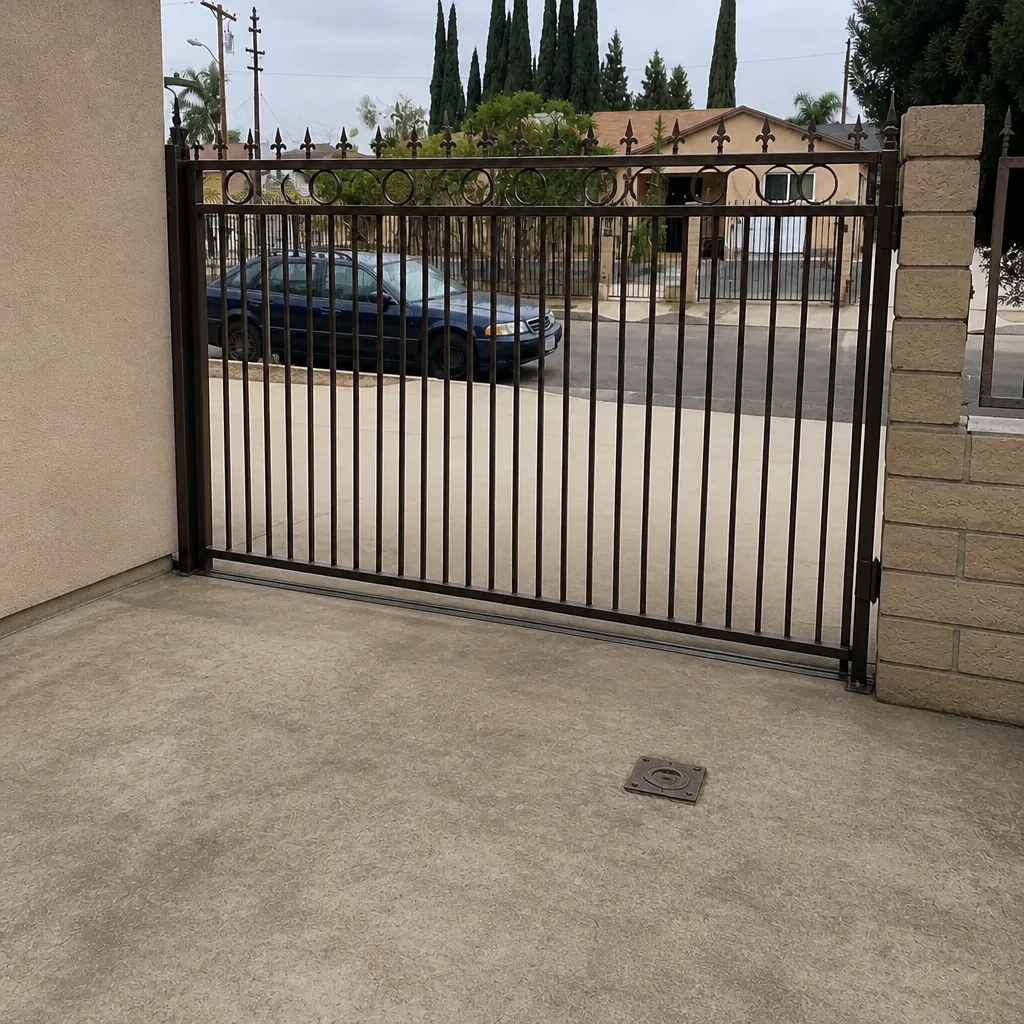 After
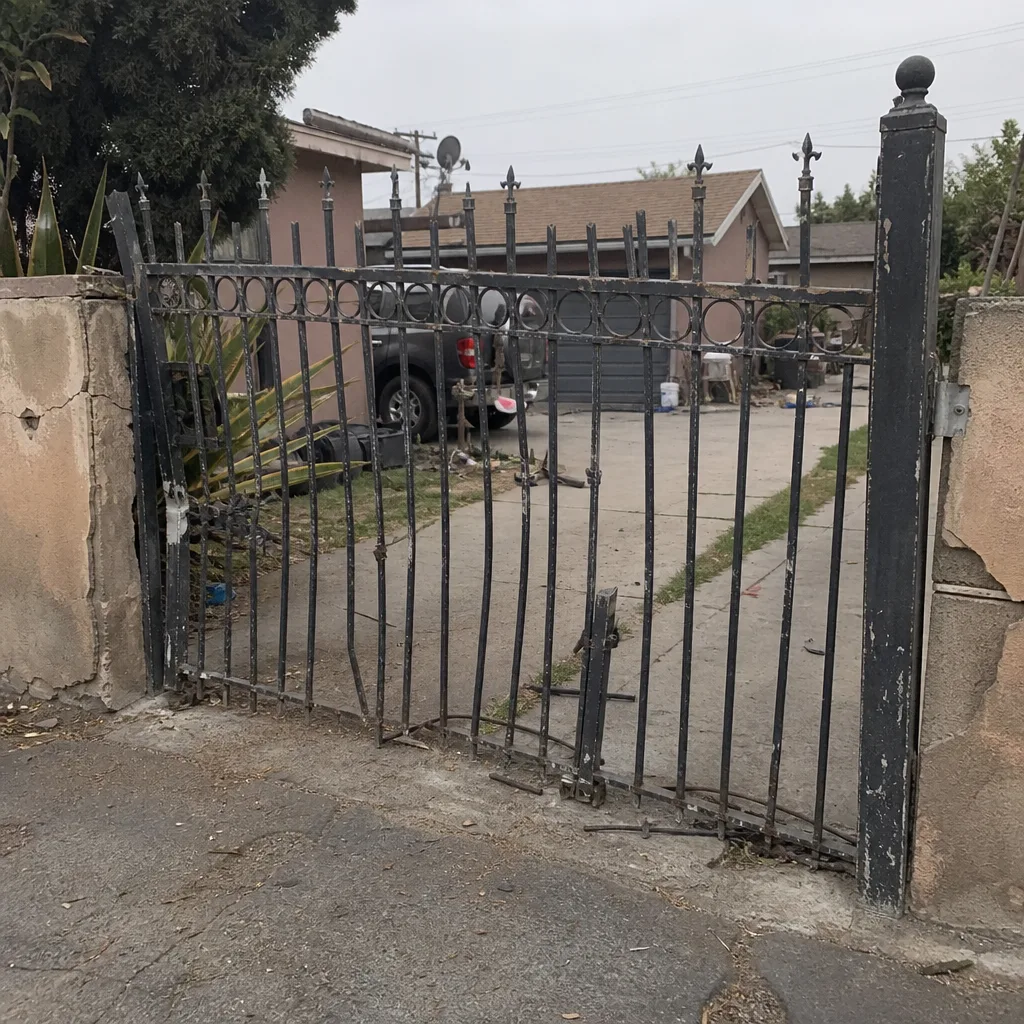 Before
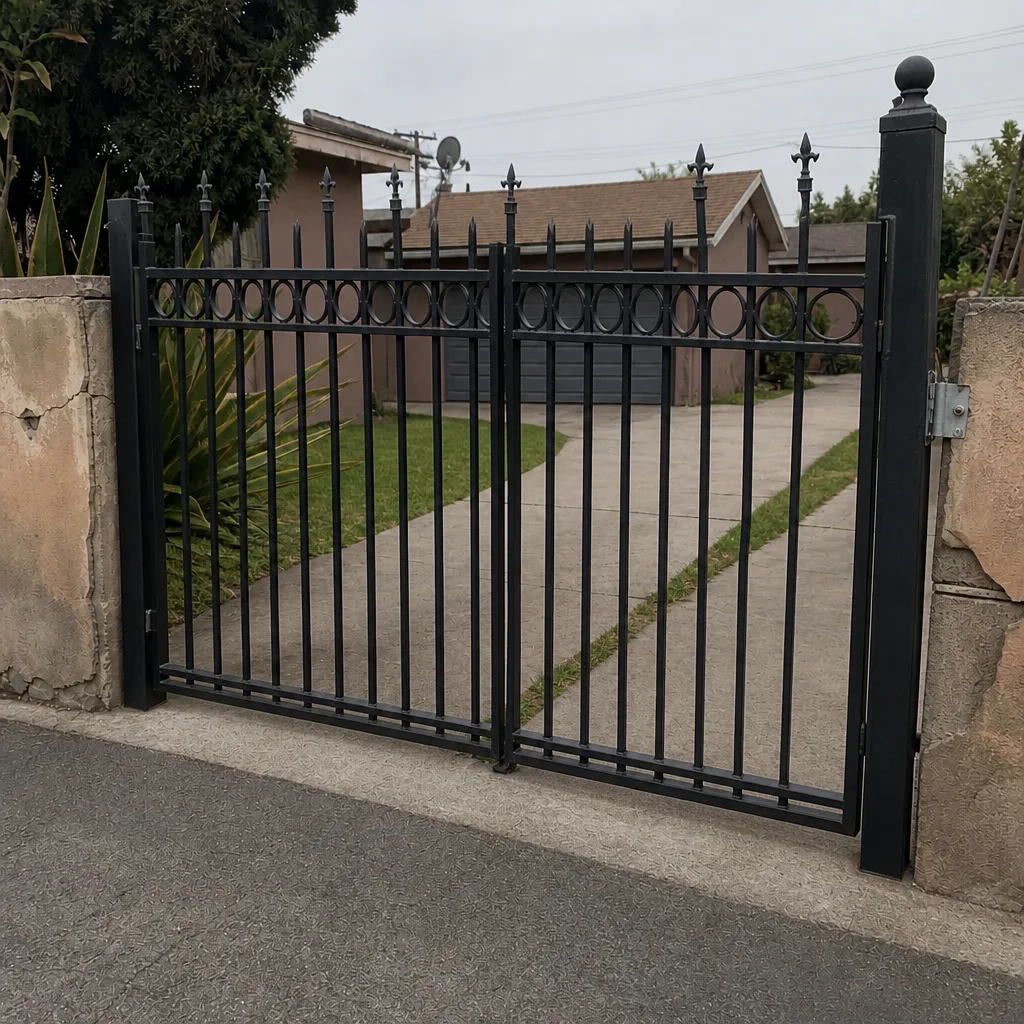 After
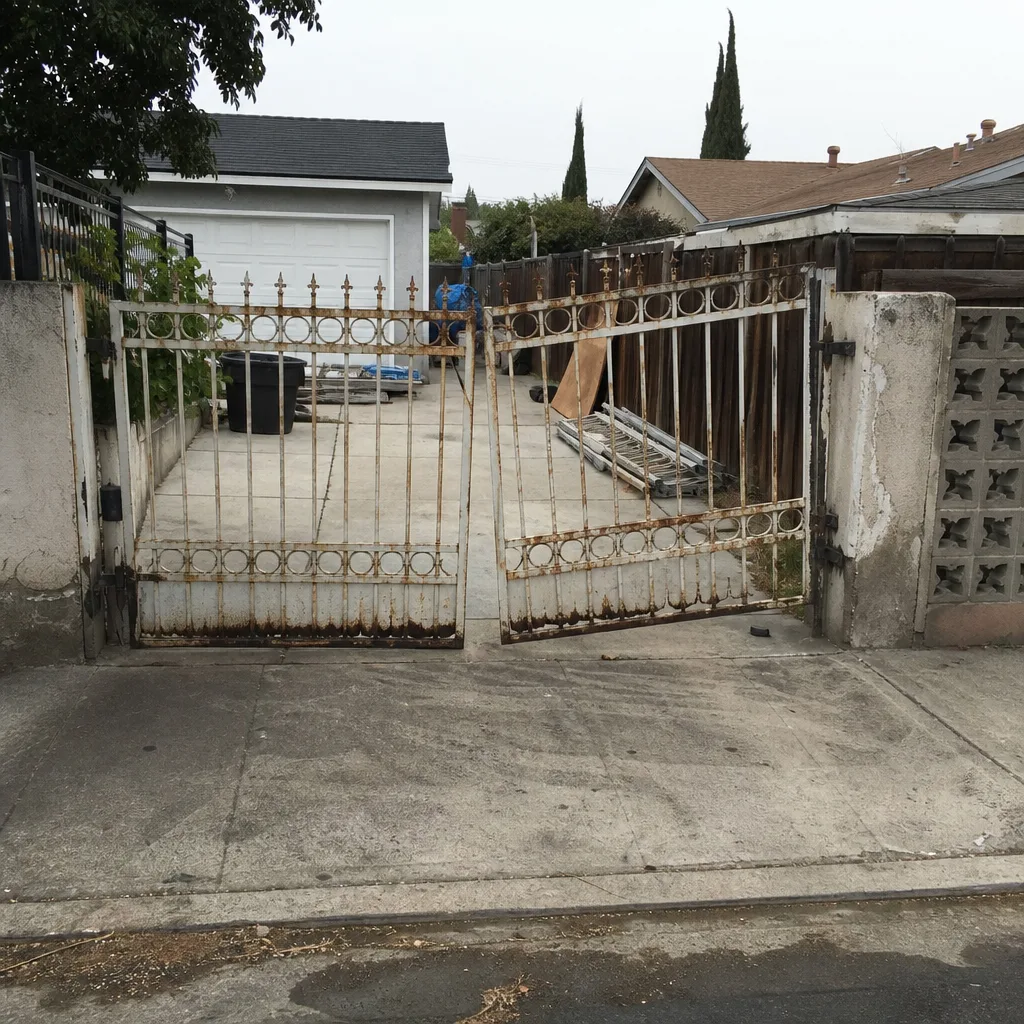 Before
 After
Frequently Asked Questions
Find the manual release on your operator, kill the power at the breaker, disengage the release, and move the gate by hand until power returns. To get your gate working again fast, call (866) 569-6161 if the release is missing, jammed, or you’re not sure where it is.
Yes, most automated gate operators have a manual release that disconnects the gate leaf from the motor so you can move it by hand. The release type varies by brand, and if you can’t find it or it won’t disengage, call (866) 569-6161 for same-day electric gate repair.
Yes, a gate stuck open is a security emergency because it leaves your property exposed. Secure it with a chain, lock, or barricade immediately, then call (866) 569-6161. We answer 24/7, and fast dispatch runs from 7am to 7pm, Sunday through Friday.
The final price depends on what’s wrong, and the written estimate sets the price before any work starts. Estimates are free. Call (866) 569-6161 and describe what your gate is doing, and we can give you a clear picture of what to expect.
We service equipment from nine major gate-automation brands, including LiftMaster, Linear, FAAC, DoorKing, and Viking. Automated or manual, we handle it. If your operator is from a less common brand, call (866) 569-6161 and we’ll let you know what we can do before we come out.
Most repairs that replace existing components don’t require a permit, but structural changes and new installations may. Ask your city’s building department to confirm. We can also point you in the right direction when you call (866) 569-6161.
The Bottom Line
A gate emergency is a problem you can prepare for before it happens. Know which way your gate typically fails, find your manual release and test it once, and build a simple emergency kit with a spare remote, a release key, a chain and lock, and the phone number you’ll need. When something does go wrong, diagnose what you can in five minutes and call a specialist who works on the brand you already have. Gate repair is all we do. From a single broken hinge to a full electric-gate installation, Compton property owners can rely on us for free estimates and clear pricing before any work begins. Call (866) 569-6161. We answer 24/7. Fast dispatch from 7am to 7pm, Sunday through Friday.
Written by the team at Gate Repair Compton, serving Compton since 2014.