
Last updated November 4, 2026
 Wrought iron
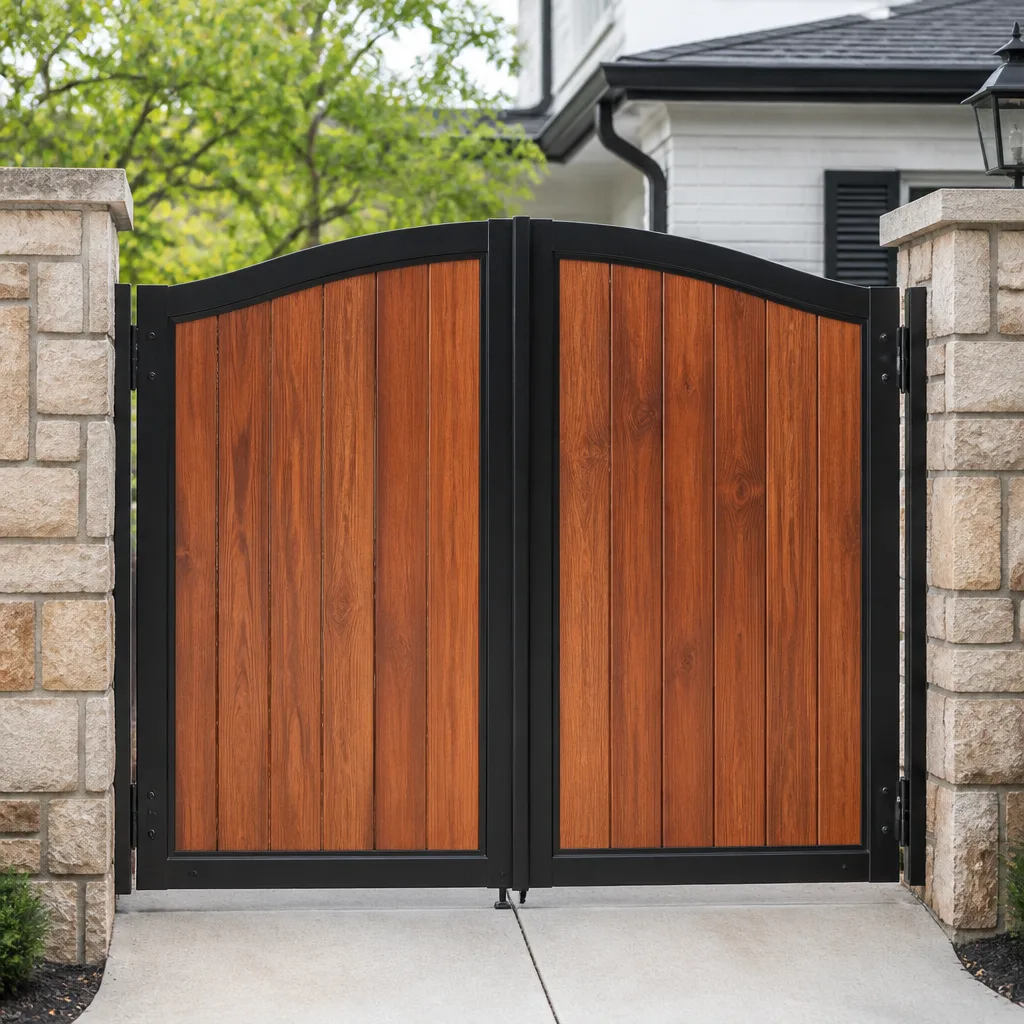 Wood & steel frame
 Farm & ranch
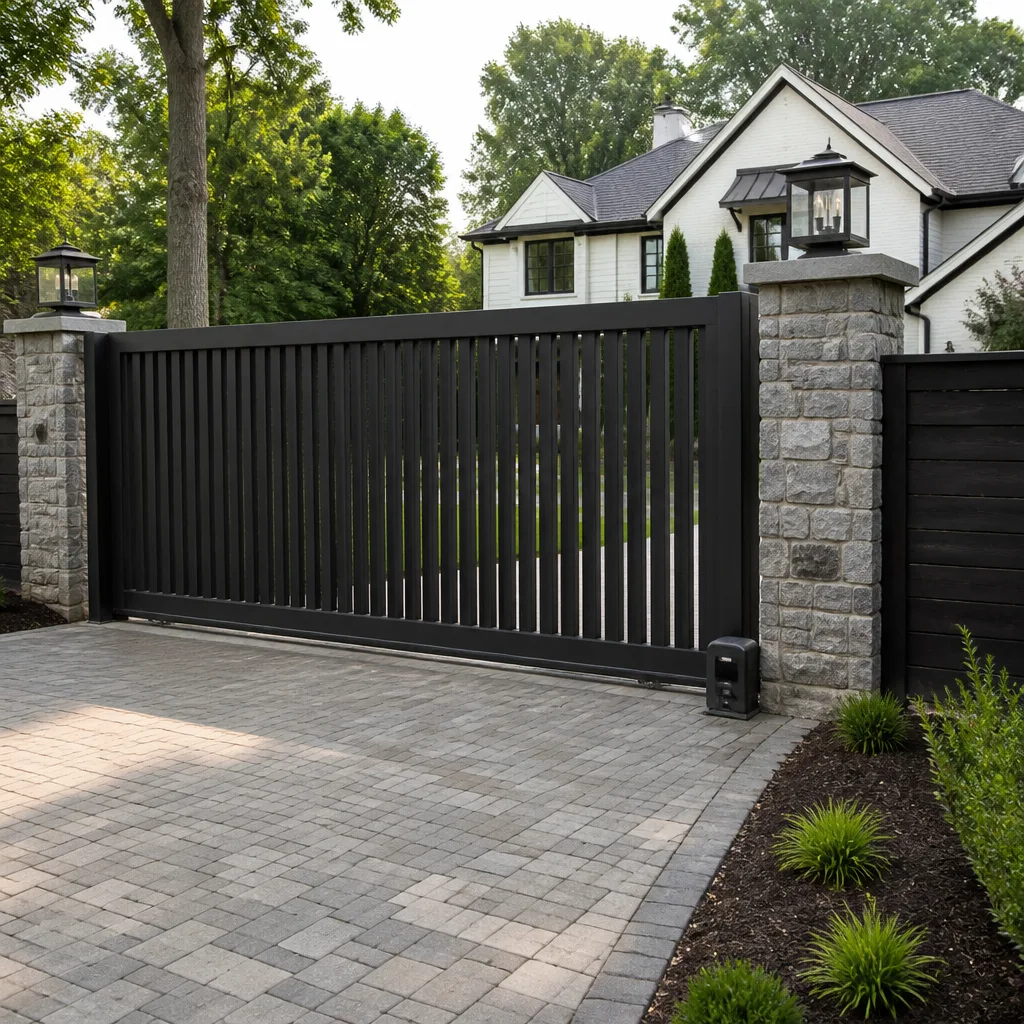 Sliding driveway gates
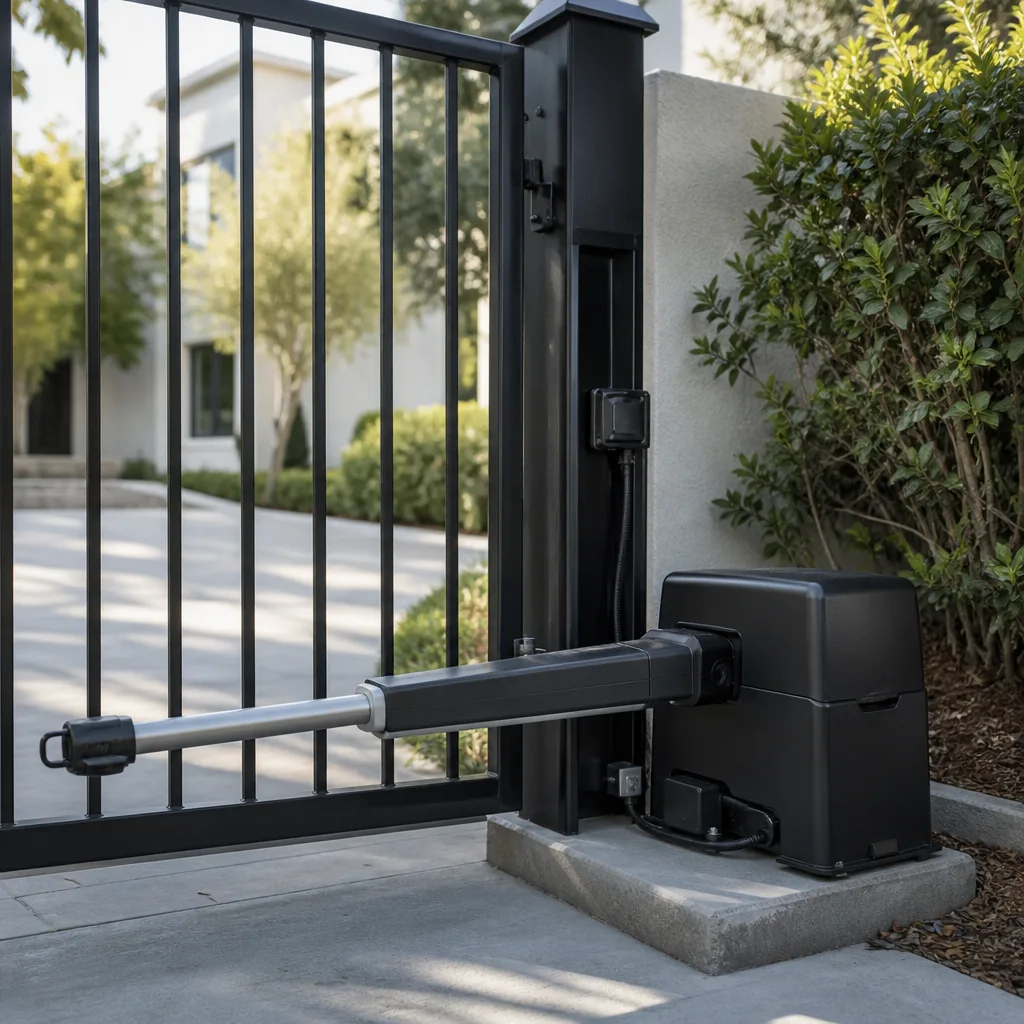 LiftMaster operators
Free on-site gate assessment - hinges, posts, and your LiftMaster or Nice gate operator checked before anything is quoted
The assessment is free and the quote is the invoice.
Get your free estimateGate Repair Maintenance Schedule: What to Do and When
The chain on a slide gate operator should be lubricated every 90 days. Most owners in Compton either never touch it or drench it with WD-40, which strips the factory grease and accelerates wear. The truth about gate maintenance is uncomfortable for anyone who treats it like a single annual checkup: the components that fail are rarely the ones you think about, and the intervals that matter are almost always shorter than you assume. This guide gives you a working calendar for gate care, one that separates monthly owner tasks from quarterly inspections and annual full-service work. We’ll cover what to lubricate, what to inspect, what to test, and what to hand off to a technician before it becomes a repair.
Quick Answer
A working gate maintenance schedule has three tiers: monthly visual checks of hinges, wheels, track, and safety edges; quarterly lubrication of the chain or rack and a battery backup load test; and an annual technician inspection covering motor torque, limit switches, loop detectors, and hardware replacement. Most gate owners in Compton will spend 15 minutes a month and roughly 90 minutes a quarter on these tasks, with one full service visit per year.
Styles & brands we work with
- Wrought iron
- Wood & steel frame
- Farm & ranch
- Sliding driveway gates
- LiftMaster operators
Table of Contents
- Why Most Gate Maintenance Schedules Fail
- Monthly Owner Tasks: The 15-Minute Walkaround
- Quarterly Tasks: Lubrication, Battery Load Test, and Operator Checks
- Annual Technician Service: What Happens in a Full Inspection
- Component-Specific Lubrication: Chains, Hinges, and Rack-and-Pinion
- Compton-Specific Stressors: Soil, Sun, and Hardware Corrosion
- Battery Backup Load Testing: What Voltage Under Load Actually Means
- Why a Maintenance Log Matters for Warranties and Resale
Why Most Gate Maintenance Schedules Fail
Most maintenance schedules for gates fail for one of three reasons. They’re aspirational rather than usable, they lump together components with wildly different wear cycles, or they tell owners to do the right thing at the wrong time. A hinge that carries 300 pounds of steel wears at a different rate than a chain that moves every time the gate cycles. A battery that sits in a plastic housing under the Compton sun degrades differently than a limit switch that rarely moves. Treating them all under a single “annual checkup” banner means some components get attention too late and others get attention they don’t need.
We work on gate systems from Mighty Mule, LiftMaster, FAAC, and BFT, among others, and the failure patterns are consistent across brands: owners neglect the cheap, fast, simple tasks and then pay for the expensive consequences. A monthly visual check costs nothing. Replacing a bent hinge bracket before it shears costs under a hundred dollars. Replacing a motor that burned out because a misaligned gate forced it to work against resistance costs significantly more. The schedule below separates tasks by interval so each component gets attention at the rate it actually wears.
For a broader look at what we handle, see our gate repair service page. The maintenance schedule here is the prevention half of that equation.
Monthly Owner Tasks: The 15-Minute Walkaround
The monthly walkaround is not a deep inspection. It’s a visual and tactile pass over the gate and its hardware to catch issues before they compound. You’re looking for anything that changed since last month: a new squeak, a hinge that sits differently, a gap that wasn’t there, a safety edge that’s peeling away from the frame. Most owners can do this in 15 minutes, and it’s the single highest-value maintenance habit you can build.
Step-by-step monthly check:
- Open and close the gate fully twice. Listen for grinding, scraping, or hesitation. A smooth gate sounds smooth. A gate that pauses, shudders, or reverses mid-cycle is telling you something is off.
- Look at every hinge and bracket. Rust, cracked welds, loose bolts, and bent brackets all announce themselves visually. Tighten anything loose with a wrench if you have one. If a bolt keeps loosening, the hole may be wallowed out and the hardware needs replacement.
- Check the wheels and track (if you have a slide gate). Debris in the track, flat spots on wheels, or wheels that don’t rotate freely all force the motor to work harder. Clear the track of leaves, gravel, and dirt.
- Inspect the safety edges and photo eyes. Wipe the photo eye lenses with a dry cloth. Check that safety edges are securely attached and that the rubber is not cracked, peeling, or compressed flat.
- Look at the ground under the gate. New gaps, tilting posts, or ground that’s shifted after rain can misalign a gate enough to strain the operator. In Compton, the soil can shift noticeably between dry and wet seasons.
- Check the control box. Open the operator housing and look for ants, spider webs, rodent droppings, or moisture. Pests love warm control boxes. Blow out dust with compressed air if needed.
None of this requires technical skill. It requires attention. A monthly pass means problems get caught at the stage where they’re cheap and fast to fix, not after they’ve cascaded into motor damage or a gate off its track. If the gate is an automated system and you’re not sure what a specific component does, that’s fine. You don’t need to understand the control board to see that a hinge is rusting.
Quarterly Tasks: Lubrication, Battery Load Test, and Operator Checks
Every 90 days, the gate needs a round of lubrication, a battery test, and a slightly deeper look at the operator. This is where the schedule gets specific, because the wrong lubricant on the wrong component causes more damage than skipping lubrication entirely.
Quarterly task list:
- Lubricate the chain (slide gates) with a dry-film chain lubricant or white lithium grease. Do not use WD-40. WD-40 is a solvent, not a lubricant. It dissolves the grease that’s already on the chain and leaves behind a thin film that offers almost no protection. The chain needs a lubricant that stays in place and resists collecting grit.
- Lubricate hinges and pivot points with a heavier grease. Hinges move slowly under high load. They need something that won’t run off. A standard bearing grease or heavy lithium grease works well. Wipe away the old grease first rather than layering fresh over dirty.
- For rack-and-pinion gates, apply a light coat of open-gear lubricant to the rack teeth. Rack gears mesh under load. They need a tacky, purpose-made open-gear lube that stays on the teeth without flinging off or attracting sand. Grease that’s too heavy will pack into the tooth roots and cause binding.
- Test the battery backup. With the gate closed, unplug the operator from AC power and run one full open-close cycle on battery only. The gate should move at full speed or close to it. If it labors, slows dramatically, or stops midway, the battery is failing and needs replacement. Reconnect the power after the test.
- Run the obstruction test. With the gate closing, place a gloved hand or a cardboard box in the path of the safety edge. The gate should stop and reverse immediately. If it doesn’t, stop using the automatic function and call a technician. A safety edge that fails this test is a serious injury risk.
- Check belt tension (belt-driven operators). A belt that’s loose will slip, causing the gate to stutter and the motor to work harder. A belt that’s too tight will accelerate bearing wear. Most belts should deflect roughly half an inch under firm thumb pressure, but check your operator’s manual for the exact spec.
If any of these tasks reveals something you can’t fix, that’s not a maintenance failure. That’s the schedule working exactly as intended. The point is to find the problem early. Our electric gate repair service handles the fixes that quarterly checks uncover, from limit switch adjustments to full board diagnosis.
Annual Technician Service: What Happens in a Full Inspection
Once a year, a gate technician should perform a full service. This is not the same as the quarterly work you do yourself. The annual visit checks components that are hard to see, hard to reach, or require test equipment. It also covers the items that manufacturers specify for warranty compliance.
A proper annual service typically includes:
- Motor torque and limit switch calibration. The motor should stop at the right points with the right force. Over time, limit switches drift. Torque settings that were correct on day one may now be too aggressive for worn hardware or too weak for a gate that’s stiffened up.
- Full wiring inspection. Every connection in the control box and at the operator gets checked for tightness, corrosion, and heat damage. Loose terminals cause voltage drop and intermittent failures that are maddening to diagnose.
- Loop detector test. The underground loops that tell the gate a car is waiting should be tested for proper frequency and sensitivity. Compton’s alkaline soil can degrade buried loop wire insulation over time, which changes the loop’s electrical signature and causes phantom triggers or missed detections.
- Battery capacity test under load. The quarterly test tells you something at a glance. The annual test uses a load tester to measure actual capacity. Batteries lose capacity gradually, and a battery that passes the quarterly “open and close once” test may still be at 40% of rated capacity, which means it fails when you actually need it.
- Hardware replacement. Hinges, wheels, brackets, and bolts that are worn but still functional get flagged and recommended for replacement. A $40 hinge replaced in year three prevents a $500 misalignment repair in year four.
- Safety system verification. Photo eyes, safety edges, and reversal functions get tested against manufacturer spec. This is a liability issue as much as a functionality issue.
- Firmware and control board check. Some newer operators from brands like LiftMaster and BFT receive firmware updates. The board should be inspected for swollen capacitors, heat marks, or signs of insect damage.
In our experience, annual service on a gate that’s been receiving quarterly attention is fast and inexpensive. Annual service on a gate that’s been ignored is where we find the expensive problems. The gap between those two experiences is the entire argument for a maintenance schedule.
Component-Specific Lubrication: Chains, Hinges, and Rack-and-Pinion
The most common self-inflicted wound we see on gates in Compton is lubricant mismatch. Different components need different products, and using one product everywhere is worse than using nothing. Here’s the breakdown.
Chains (slide gate operators): Use a dry-film chain lubricant or white lithium grease. Apply to the inside of the chain while rotating it by hand, then wipe off the excess. The goal is a thin, even film on the pins and rollers. Chains don’t need to look wet. A dry-looking chain with properly lubed pins runs quieter and lasts longer than a dripping chain that’s collected a paste of dirt and old grease.
Hinges and pivot points: Use a heavier grease, like a standard automotive bearing grease. Apply after cleaning the old grease off with a rag. Hinges move through a small arc under high load. The grease needs to stay where you put it and cushion the metal-to-metal contact. Thin spray lubes run off within days and leave the hinge dry.
Rack-and-pinion systems: Use an open-gear lubricant, which is tacky and designed to stay on gear teeth. Regular grease packs into the tooth roots, hardens with dirt, and eventually prevents proper meshing. Apply a thin coat to the entire rack, then run the gate one cycle to distribute it. Wipe away any excess that squeezed out of the teeth.
Wheels and bearings (slide gates): Many wheels have sealed bearings that don’t need lubrication. If your wheels have grease fittings, a few pumps from a grease gun each quarter is sufficient. More is not better. Overgreasing blows seals and lets dirt in.
What never gets lubricated: Photo eye lenses, safety edge rubber, limit switches, and control boards. Lubricant on electrical components attracts dust and creates shorts. Lubricant on photo eyes blinds them. If you’re unsure whether a component should be lubricated, leave it dry and ask a technician.
Compton-Specific Stressors: Soil, Sun, and Hardware Corrosion
Gate maintenance advice that’s written for a generic American suburb misses the environmental conditions that actually affect equipment in Compton. The stressors here are specific, and they show up in predictable ways during Compton service calls.
Alkaline soil and buried loop wire. The soil in much of Compton is naturally alkaline. Buried loop detection wire with compromised insulation degrades faster in alkaline conditions. PVC conduit helps, but many older installations have direct-burial wire that’s been in the ground for ten or fifteen years. When a loop fails, the gate either stops detecting vehicles entirely or triggers on its own. Annual loop testing catches insulation breakdown before it becomes a mystery service call.
UV degradation on rubber and plastic. Compton gets strong, consistent sun. Rubber gate seals, safety edge covers, and plastic housings all break down under UV exposure. Seals crack at the top where the sun hits them hardest. Safety edges lose their flexibility and stop rebounding properly. Operator covers fade and become brittle. The monthly visual check is where UV damage shows up first, and replacing a $30 seal beats paying for water intrusion into an operator housing.
Zinc hardware corrosion. Inland air doesn’t carry the salt of a coastal climate, but temperature swings and occasional fog create condensation on metal parts. Zinc-plated bolts and brackets corrode slowly but steadily, especially at the points where dissimilar metals meet. Stainless steel hardware costs more upfront and outlasts zinc by years in this environment. If you’re replacing gate hardware in Compton, stainless is the right choice for anything structural.
Dust and grit. Compton isn’t a dusty desert, but the wind does carry fine particulate. Grit works its way into chains, rack teeth, and hinge grease, and it turns lubricant into grinding paste. That’s why quarterly cleaning before lubrication matters. Putting fresh lube over dirty lube just seals the grit in place against the metal.
Battery Backup Load Testing: What Voltage Under Load Actually Means
A battery can show 12.8 volts on a multimeter and still be dead. Voltage is not the same as capacity. The test that matters is what happens to the voltage when the battery is asked to actually do work. That’s what “voltage under load” means, and it’s the difference between a battery that works on paper and one that works when the power goes out.
The quarterly no-tools test:
- Close the gate.
- Unplug the operator from AC power (or flip the breaker if it’s hardwired).
- Run one full open-close cycle using battery power only.
- Watch the speed and listen to the motor.
- Reconnect power.
A healthy battery will drive the gate at near-normal speed. A battery that’s aged will move the gate slowly, or the gate will start fine and then sag halfway through the cycle. The motor’s sound changes too: it’s more labored, lower in pitch, like it’s struggling. If you see any of that, the battery needs replacement soon.
The reason this test works is simple: a failing battery can hold a surface charge that looks fine on a meter, but as soon as the gate motor pulls real current, the voltage collapses, and the motor starves. The same principle applies to car batteries. A battery that shows 12.4 volts sitting still can drop to 9 volts under starter load, and the car won’t crank. Your gate is no different. Battery backup systems on operators from FAAC, BFT, and other brands all fail this same way eventually, and the quarterly test catches the decline before the next power outage reveals it.
If the battery is more than three years old and you’ve never load-tested it, assume it needs replacement regardless of what the test shows. Batteries have a finite life even when they’re never used. Heat is the primary killer, and a plastic battery box in full Compton sun is a hostile environment for lead-acid chemistry.
Why a Maintenance Log Matters for Warranties and Resale
A maintenance log takes five minutes to update and pays off in two situations most owners never anticipate: warranty claims and property sales.
Warranty claims. Most gate operator warranties require “proper maintenance” as a condition of coverage. That’s a vague phrase until you need to make a claim. A log with dated entries, the work performed, and who performed it turns a verbal claim into documentation. Without the log, the manufacturer can deny a motor replacement because you can’t prove the quarterly lubrication and annual inspection ever happened. With the log, the claim is clean. Write down the date, the task, and any component you replaced. Keep receipts for parts.
Property resale. When you sell a home with an automated gate, the buyer inherits the system as-is. The gate doesn’t show up on a standard home inspection report in any meaningful depth. A seller who can hand over documented maintenance entries spanning several years, with technician names and part replacements, is signaling that the property was managed carefully. That matters more for a gate than for a water heater, because few buyers have any idea what an automated gate costs to maintain or repair. Documentation closes that information gap and prevents the gate from becoming a negotiating point.
If you’re just starting a log now, begin with a baseline: note the date, the gate’s current condition, the last time each major component was serviced, and what the next scheduled task is. From there, the monthly and quarterly entries write themselves. For a page that explains the full scope of what we repair when maintenance has been skipped, visit our main Gate Repair Compton page.
Common Mistakes to Avoid
- Using WD-40 on chains and hinges. It strips lubricant and leaves components dry. WD-40 is a water displacer and rust penetrant, not a lubricant. Chains need white lithium or dry-film lube; hinges need grease.
- Skipping the monthly visual check because “nothing changes month to month.” This is exactly backwards. The whole point is that most gate problems develop incrementally and visually before they become mechanical failures. A monthly habit costs 15 minutes.
- Lubricating without cleaning first. Fresh lube over dirty lube creates an abrasive paste. Wipe the old grease off with a rag, then apply new lubricant. It takes an extra two minutes and prevents accelerated wear.
- Ignoring a gate that’s slightly slower than it used to be. Gradual slowdown is a classic warning sign of low voltage, failing capacitors, or increasing mechanical resistance. A gate that moves slower today than it did last year is not “fine.” Something is changing.
- Testing the battery backup by pressing the test button and assuming a green light means the battery is good. The test button often checks the battery’s surface voltage, not its capacity under load. The only reliable test is running the gate on battery power and watching the speed.
- Letting loop issues go unrepaired because “the gate still opens.” A failing loop can cause phantom openings, failure to detect vehicles, or the gate reversing on a car. Loop problems are safety problems, not just convenience problems.
- Replacing hardware with whatever bolts are on hand at the hardware store. Gate hardware carries real structural load. Cheap zinc bolts in a Compton environment corrode and fail faster than grade-appropriate stainless hardware. The wrong bolt in the wrong place becomes a failure point.
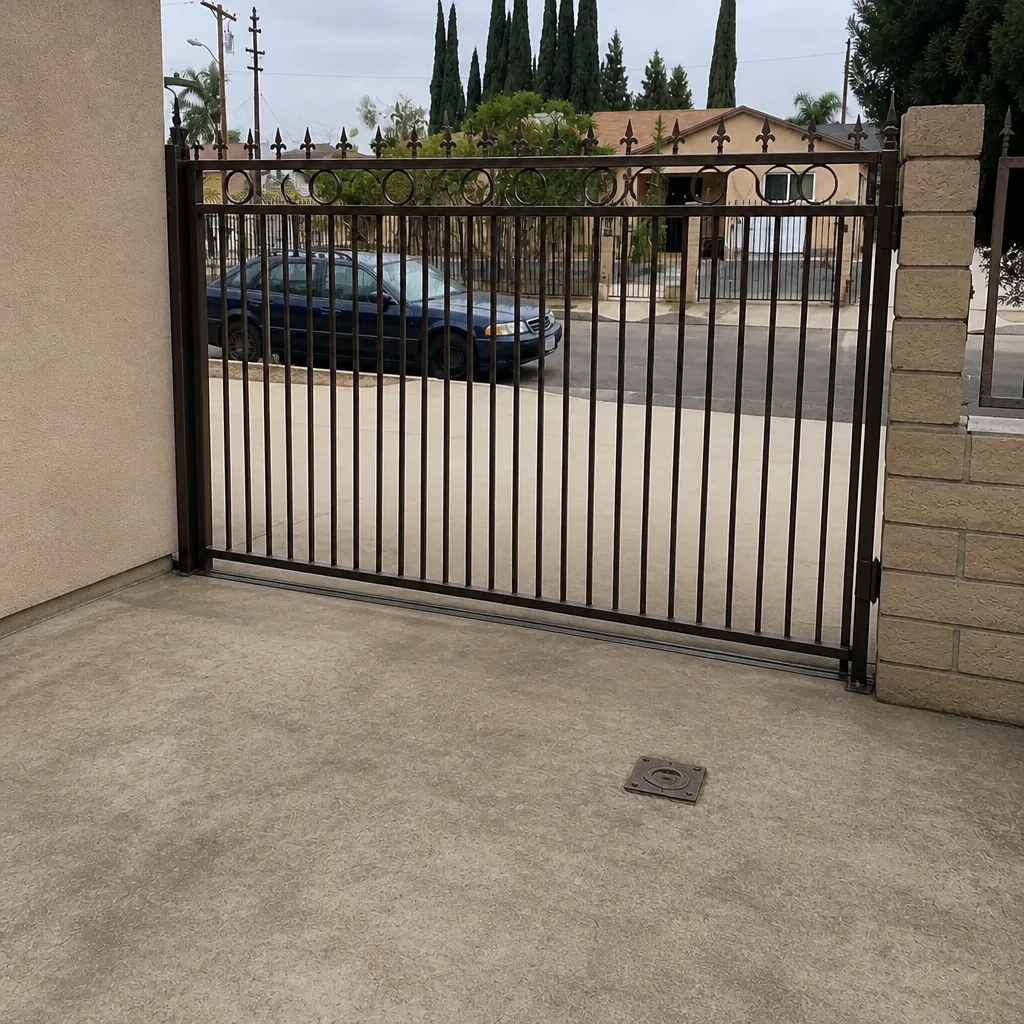
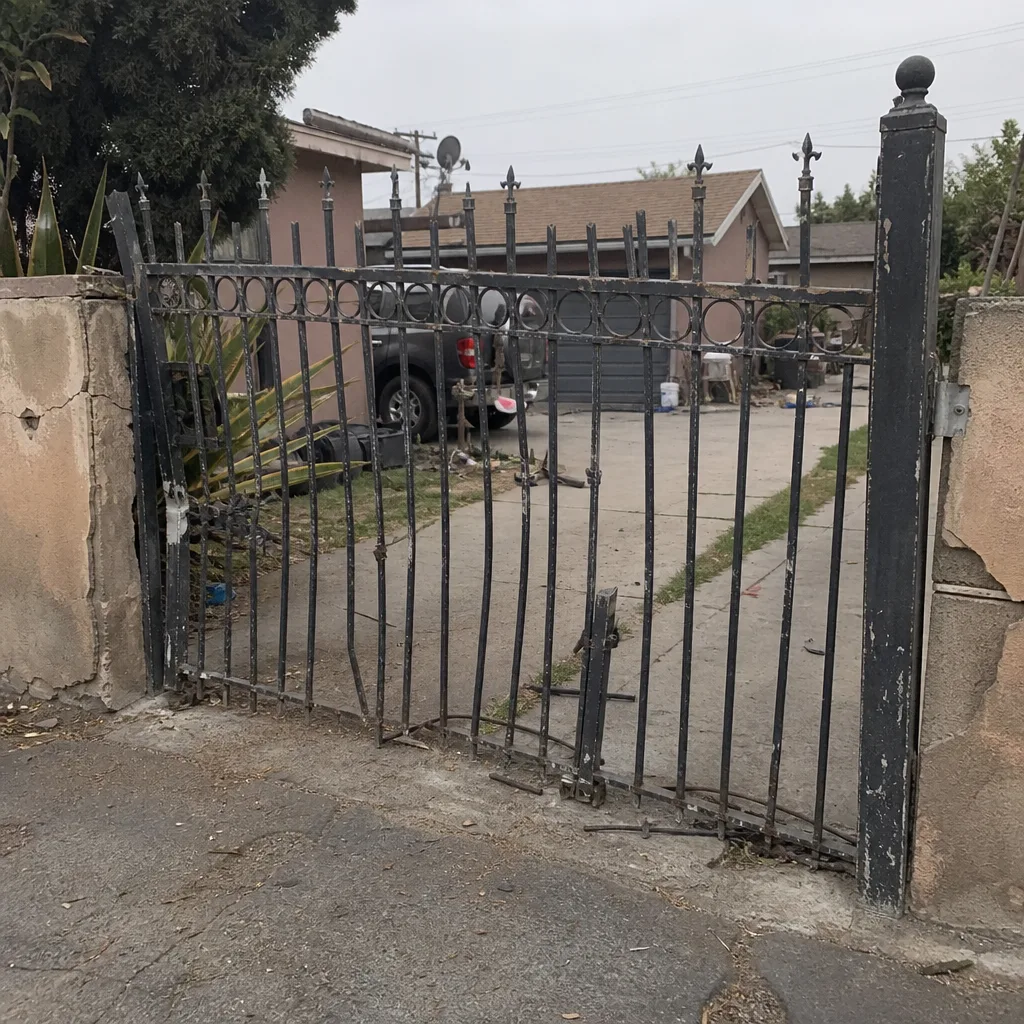
See the difference
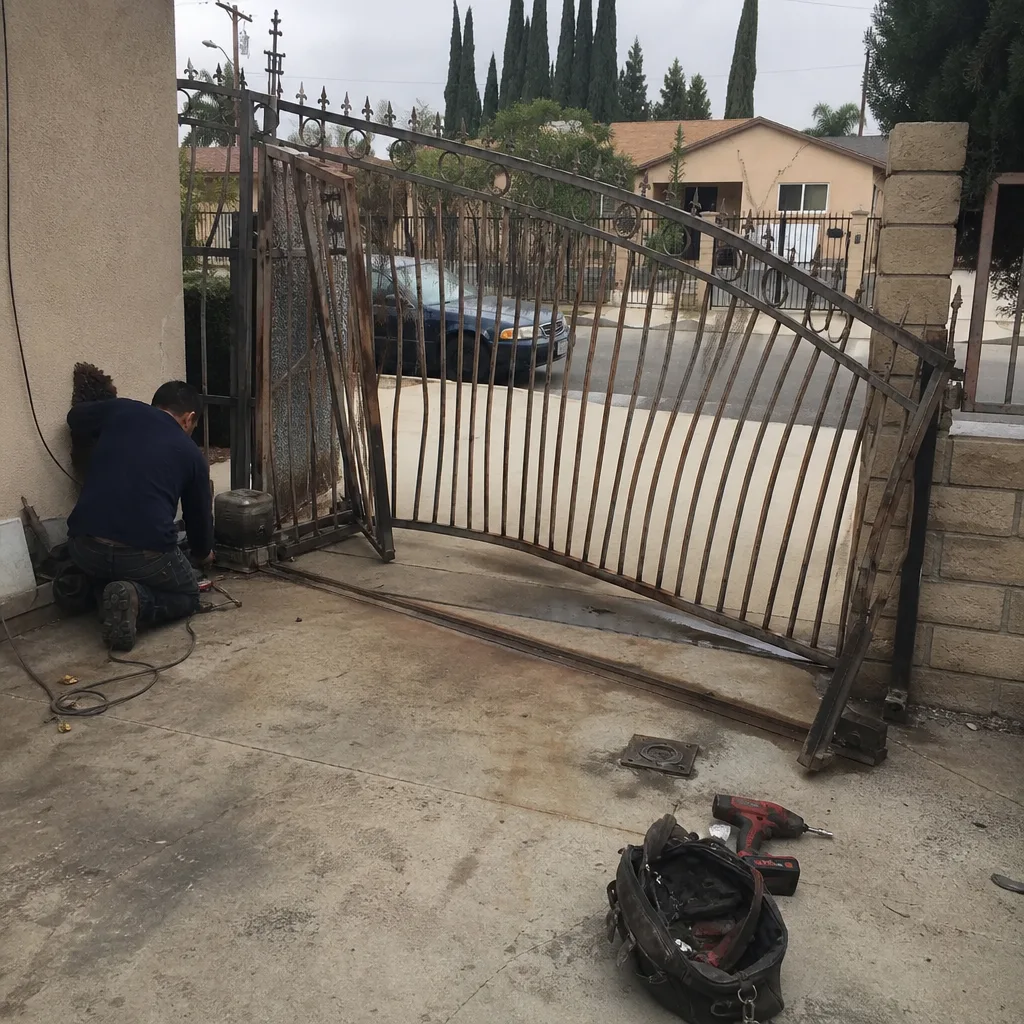 Before
 After
 Before
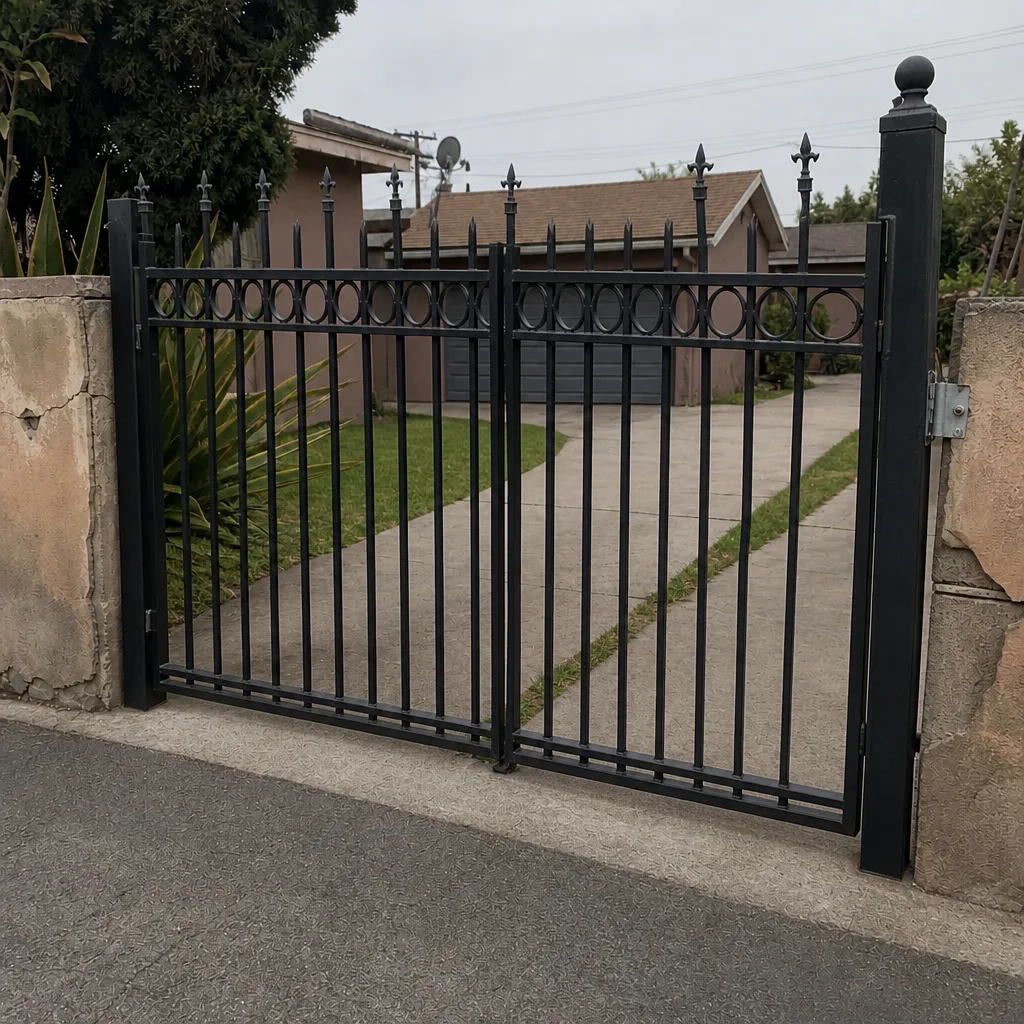 After
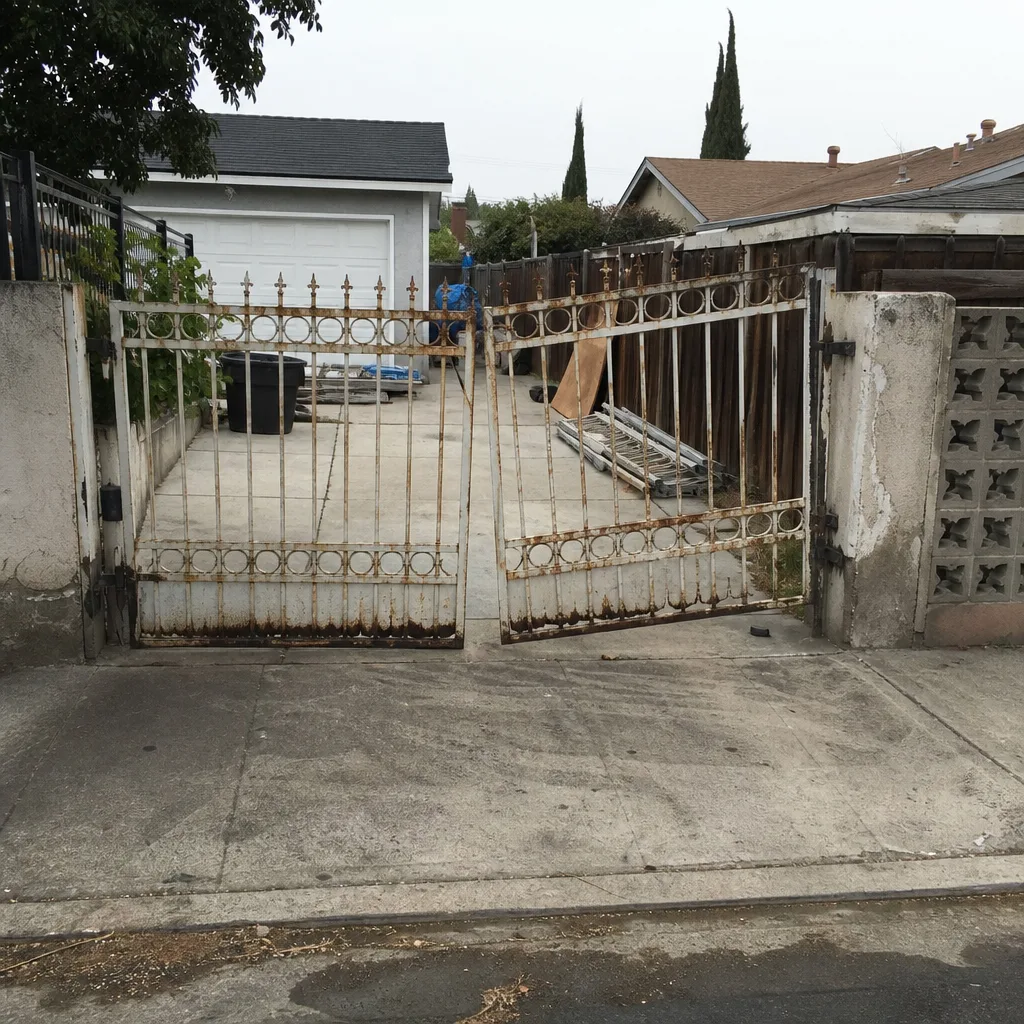 Before
 After
When to Call a Professional
Some maintenance tasks are yours, and some are not. If the gate fails the obstruction test, meaning it doesn’t reverse when the safety edge is triggered, stop using the automatic function immediately and call a technician. A gate that won’t reverse is dangerous. If the gate is off its track, if a hinge has sheared, if the motor hums but the gate doesn’t move, or if you smell burning from the control box, do not keep trying to operate the gate. Each of these is a failure that gets worse with additional cycling. If you’re not comfortable working near the operator wiring or inside the control box, don’t. The control board carries live voltage even when the gate is idle. Gate Repair Compton offers free estimates in Compton, and a technician can tell you whether the problem is a five-minute adjustment or a full repair. Call (866) 569-6161 for a free estimate.
Frequently Asked Questions
A gate should get monthly visual checks from the owner, quarterly lubrication and battery testing, and one annual full-service visit from a technician. The monthly tasks are quick visual and listening checks. The quarterly tasks are hands-on: lubricant, battery load test, safety edge test. The annual visit covers calibration, wiring, loop testing, and hardware replacement that’s beyond the scope of routine owner maintenance.
Use a dry-film chain lubricant or white lithium grease on a gate chain. Never use WD-40. It’s a solvent that strips the factory grease and leaves the chain nearly dry. Apply the lubricant to the inside of the chain, rotate it by hand to work it into the pins, and wipe off the excess so it doesn’t collect grit.
Close the gate, unplug the operator from AC power, and run one full open-close cycle on battery only. Watch the gate’s speed and listen to the motor. A healthy battery moves the gate at normal speed. A failing battery causes slow movement, sagging mid-cycle, or a labored motor sound. Reconnect the power after the test.
Yes, it does. Compton’s alkaline soil can degrade the insulation on buried loop detection wire, which leads to phantom triggering or missed vehicle detection. Drier and wetter seasons also cause soil to shift, which can tilt gate posts and misalign a gate over time. Annual loop testing and a monthly visual check of post alignment are both worth doing.
Yes, if you’re comfortable with basic tools and the repair is limited to visible hardware. A loose bolt can be tightened. A rusted hinge can be replaced if you know the gate is properly supported. But if a hinge has sheared, if the gate is leaning, or if anything involves the operator, the motor, or the control board, call a professional. Heavy gate panels shift fast, and the operator wiring carries live voltage.
Annual gate maintenance in Compton typically costs a few hundred dollars for a full technician service on a residential automated gate, with the final price set by the written estimate after the technician sees the gate. Monthly tasks cost nothing but your time. Quarterly lubricants run under $20. If the annual service uncovers worn parts, those are quoted separately before any work starts. Call (866) 569-6161 for an exact quote. Estimates are free.
The Bottom Line
Gate maintenance works when it’s split into three rhythms: monthly for eyes and ears, quarterly for hands-on tasks, annual for a technician’s inspection. The monthly check catches slow changes before they become failures. The quarterly work handles lubricant and battery care, which are the two areas where owner mistakes are costliest. The annual visit calibrates, verifies, and documents. None of it is complicated, but all of it is specific. Use the right lubricants, test the battery under load, keep a written log, and treat Compton’s sun, soil, and seasonal shifts as the design conditions they are. A gate that’s maintained on this schedule will outlast one that’s repaired only when it stops working, and it’ll cost less along the way.
Written by the team at Gate Repair Compton, serving Compton since 2014.