
Last updated November 4, 2026
 Wrought iron
 Wood & steel frame
 Farm & ranch
 Sliding driveway gates
 LiftMaster operators
Free on-site gate assessment - hinges, posts, and your LiftMaster or Nice gate operator checked before anything is quoted
The assessment is free and the quote is the invoice.
Get your free estimateGate Repair Permits, Codes & Inspections in Compton, CA: What You Need to Know
Most Compton homeowners get the permit question exactly backwards. They pull permits for hinge replacements and wheel adjustments, then skip them for the one job that genuinely requires one: installing a new electric gate operator on an existing gate. That single misstep leaves a legal and financial trail that surfaces years later, usually during a home inspection when a buyer’s inspector flags the unpermitted electrical work. This guide draws the line clearly between what the City of Compton requires, what California code enforces, and how to protect yourself whether you’re repairing a sagging gate or automating your driveway from scratch.
Quick Answer
Like-for-like gate repairs on existing components in Compton typically do not require a permit. However, installing a new gate operator with a new electrical circuit, pouring new concrete footings for posts, or building an entirely new gate almost always does. When in doubt, call the City of Compton Building and Safety Division before work starts. A licensed contractor who knows gate systems will usually handle this determination for you during the estimate.
Styles & brands we work with
- Wrought iron
- Wood & steel frame
- Farm & ranch
- Sliding driveway gates
- LiftMaster operators
Table of Contents
- What Triggers a Permit Requirement in Compton
- The Repair vs. Installation Distinction That Saves You Money
- UL 325 Compliance and Why It Matters for Gate Operators
- How Unpermitted Gate Automation Complicates Home Sales and Insurance
- The Compton Permit Process: What to Expect
- What an Inspector Actually Checks on a Gate System
- A Homeowner’s Pre-Permit Checklist
- Common Mistakes to Avoid
What Triggers a Permit Requirement in Compton
California building code applies statewide, but cities like Compton enforce it through their own Building and Safety Division. For gate work specifically, three scenarios reliably trigger a permit. First, any new electrical circuit run to power a gate operator. That’s an electrical permit. Second, structural work that sets new posts in concrete or modifies an existing foundation. That’s a building permit. Third, constructing a brand-new gate where none existed, especially if it alters the property’s entry point or a fence line. That can fall under both building and zoning review.
Here’s the practical translation for Compton properties:
- New electrical circuit for a gate operator: Permit required. This is the most commonly skipped permit in gate automation, and the one that causes the most trouble later.
- Replacing an operator on an existing circuit: Usually no permit. If the wiring, breaker, and conduit are already in place and you’re swapping one UL-rated operator for another, it’s considered like-for-like replacement.
- Replacing a broken hinge, wheel, or track section: No permit. This is maintenance and repair of existing components.
- Setting new posts or pouring new footings: Permit required when the work changes the structural support of the gate or fence. Concrete depth and post sizing are code-covered items.
- Building a new gate from scratch: Permit required. The city wants to review setback, height, and materials before installation.
Compton’s residential lots vary widely, from the older grid neighborhoods near downtown to the larger parcels toward the 91 freeway corridor. The permit requirements remain consistent across all of them, but setback and height rules can differ by zone. If you’re near a corner lot, ask about sight-line restrictions before you order a tall solid gate. Our team has walked this process with homeowners across Compton, and the answer is almost always a quick call to the city before anyone starts digging or pulling wire.
The Repair vs. Installation Distinction That Saves You Money
The single most useful concept in gate permits is the difference between repair and installation, because the city sees them as entirely different activities. Repair means returning an existing system to its intended function without changing its design, footprint, or power supply. Installation means creating something new: a new circuit, a new structure, a new gate, or a new operator where none existed. The permit threshold follows that line.
A homeowner who understands this avoids two expensive mistakes. The first is pulling a permit for work that doesn’t need one, which costs time and money and can trigger a code review of unrelated things on the property. The second is skipping a permit for work that does need one, which leaves an open exposure that compounds over time. In our experience across many Compton gate repair jobs, the confusion is widespread because no one walks homeowners through the logic. The rule of thumb: if you’re fixing what’s there, you’re usually fine. If you’re adding power or structure, call the city first.
Here’s how the distinction plays out in practice:
- A sliding gate that jumps its track and needs realignment: no permit. It’s a repair.
- A swing gate with a seized hinge that needs replacement: no permit. Same component, same function.
- A manual gate you want to automate by installing an operator and running a new circuit: permit required. You’ve added electrical infrastructure.
- A damaged gate post that needs the concrete footing broken out and re-poured: permit often required. The city considers this structural work, even if the post was already there.
- An operator from one brand replaced with an operator from another on the same circuit: usually no permit. UL-rated operator for UL-rated operator is like-for-like, regardless of brand.
We work on the brand you already have, whether that’s FAAC, BFT, Linear, or Viking, and that multi-brand fluency matters when the city asks what’s being installed. A gate-only specialist can explain the technical details on the permit application in language the plan reviewer understands. That’s one reason gate repair is a trade where working with a focused company, rather than a generalist, makes the paperwork smoother even before the physical work begins.
UL 325 Compliance and Why It Matters for Gate Operators
UL 325 is the safety standard for automatic gate operators, and it’s not optional. It’s a nationally recognized standard that California code incorporates by reference, meaning any gate operator installed in Compton must comply with it. The standard sets requirements for entrapment protection, force limits, and the presence of safety devices that prevent a gate from crushing a person or vehicle. If a gate operator installation goes through a permit, the inspector will check for UL 325 compliance as part of the approval.
The practical requirements under UL 325 include:
- Entrapment protection devices: Photo eyes, edge sensors, or a combination of both. These detect an obstruction and stop or reverse the gate.
- Force limiting: The operator must stop or reverse if it encounters a set amount of resistance, preventing injury.
- Warning signs: Permanent signage on both sides of the gate alerting people to automatic operation.
- Safety for slide gates: Slide gates require specific protection because they can shear or crush if a person is caught against the receiving post. The gap between the gate and the post is a code-covered measurement.
- Safety for swing gates: Swing gates must have guards or sensors to prevent pinching at the hinge point and the latch edge.
Here’s what surprises many Compton property owners: UL 325 applies whether or not a permit was pulled. The standard is a code requirement, not a paperwork requirement. A contractor who installs an operator without the required safety edges or photo eyes has installed a non-compliant system, regardless of whether the city ever sees it. That becomes a liability issue the moment someone is injured, and an insurance issue the moment a claim is filed. When we handle electric gate repair, we’re often brought in to correct installations done by someone else who skipped these safety devices. The fix is rarely complicated, but it’s always necessary.
For automated gate systems, the dangerous parts are the operator’s wiring and power, plus the physical weight of the gate itself. A gate that fails under load or an operator wired incorrectly can cause serious injury. Never attempt to rewire a gate operator or bypass a safety sensor yourself. A trained professional who understands UL 325 requirements should handle that work.
How Unpermitted Gate Automation Complicates Home Sales and Insurance
Unpermitted electrical work doesn’t disappear. It sits in the property’s history and surfaces at the worst possible moment, often during escrow when a home inspector or a buyer’s lender asks the question their formula requires: was this work permitted? A gate operator installed without an electrical permit in Compton becomes a defect the seller must either disclose, correct, or negotiate around. The correction often costs more than the original permit would have, because it involves opening walls or conduit runs that were already closed up.
The insurance side is equally direct. If a fire or injury traces back to unpermitted electrical work, the insurance company has a defensible reason to deny the claim or reduce the payout. The homeowner’s policy language typically requires that modifications to the electrical system comply with local code and permitting. An unpermitted operator is a code violation waiting to be discovered. In our experience, this isn’t theoretical. We’ve seen Compton homeowners scramble to legalize gate automation after the fact because a sale stalled over it, and retroactive permits are always more complex than original ones.
The good news is that retroactive permitting is possible in many cases. The process involves applying for the permit after the fact, having the work inspected, and correcting anything that doesn’t meet code. It’s not free, and it’s not fast, but it’s the path back to compliance. The better path is forward, not backward: pull the permit before the operator goes in. If your gate already has unpermitted automation and you don’t know whether it’s compliant, have a licensed contractor inspect it. The cost of that inspection is small compared to the cost of a failed escrow.
The Compton Permit Process: What to Expect
The City of Compton Building and Safety Division handles gate permits. The process is more accessible than most people expect, and for a simple electrical permit tied to a gate operator, it can sometimes move in a matter of weeks depending on current workload. The key is submitting a complete application the first time. Incomplete applications are the primary cause of delay, not the city’s review speed.
Here’s the step-by-step process for a typical gate operator permit in Compton:
- Determine what permit you need: For a new electrical circuit, it’s an electrical permit. For structural post work or a new gate structure, it’s a building permit. Some projects need both. Call the Building and Safety Division and describe the work; they’ll tell you which forms apply.
- Prepare the application: You’ll need the property address, a brief scope of work, and for electrical work, basic details about the circuit and the operator being installed. A licensed contractor typically prepares this on your behalf, including the technical specs the reviewer needs.
- Submit and pay fees: Permit fees in Compton are based on the value of thework. For a gate operator on a new circuit, the fee is typically modest compared to larger home projects, but the exact number comes from the city’s fee schedule at the time of application.
- Plan review: For simple electrical permits, review is often quick. For structural work or new gate construction, the reviewer may want a site plan or elevation drawing showing gate height, setback, and materials.
- Permit issuance: Once approved, the permit is issued and the work can begin. The permit is active until the inspection passes and the project is closed.
- Inspection scheduling: The contractor calls for inspection at the right stage of work. For electrical, it’s when the circuit is roughed in and visible, before it’s covered by walls or soil. For structural, it’s when footings are dug but before concrete is poured, and again at final.
- Final approval: The inspector signs off, the permit is closed, and the work is now legal and documented. Keep the final approval record; it’s the document a buyer’s inspector will ask for later.
At Gate Repair Compton, we’ve guided homeowners through this process in Compton enough times to know that the writing on the forms is less intimidating than it looks. The city’s staff is responsive, but they expect the applicant to know what they’re asking for. That’s where a gate-specific contractor earns their keep: we can describe the scope in code language the reviewer recognizes, which reduces back-and-forth and keeps the project moving.
What an Inspector Actually Checks on a Gate System
The inspection is the moment of truth, and it’s more specific than most people expect. The inspector isn’t just confirming that a gate opens and closes. They’re checking compliance with the code sections that apply to the work described on the permit. For gate work in Compton, that means the electrical connection and the safety devices, plus the structural elements if new posts or footings were part of the scope.
Here’s what a Compton inspector typically looks for on a gate system inspection:
- Electrical connections: Proper grounding, wire sizing, conduit installation, and a dedicated circuit if one was specified. The inspector wants to see that the work matches the permit application and that the materials meet code.
- UL 325 compliance: Photo eyes, safety edges, and force settings. The inspector may simulate an obstruction to verify that the gate reverses. Entrapment protection must be present and functional.
- Warning signage: Permanent signs on both sides of the gate, visible and legible. This is a UL 325 requirement and an easy inspection item to fail if forgotten.
- Structural integrity: For new posts, the inspector checks footing depth and concrete placement. Compton’s soil conditions don’t require special engineering for most residential gates, but the city does want to see that posts are set at a proper depth for stability.
- Clearance and pinch points: For slide gates, the gap at the receiving post. For swing gates, the hinge and latch areas. These are the places where entrapment or injury happens, and code addresses them specifically.
The inspection isn’t adversarial. It’s a verification that the work will function safely for years. In our experience, inspections fail most often on missing warning signs, missing photo eyes, or a conduit run that wasn’t installed to the standard described on the permit. All are easy to correct before the inspector arrives, if the contractor knows the checklist. Automated or manual, we handle it. That includes making sure the safety details are right before the city sees them, so the inspection passes the first time.
A Homeowner’s Pre-Permit Checklist
Before you pick up the phone to start a gate project in Compton, run through this checklist. It’s designed to tell you in five minutes whether you’re facing a repair (no permit), an installation (likely permit), or a gray zone that warrants a call to the city.
- Is there any new electrical work? If you’re running a new circuit, new conduit, or a new dedicated breaker for a gate operator, that’s a permit trigger. If you’re replacing an operator on an existing circuit, it’s likely not.
- Are you setting new posts or pouring new concrete? If the existing posts stay in place and you’re replacing hardware, no permit. If you’re digging new footings, call the city first.
- Is this a new gate or a modification of an existing one? New gate construction typically requires a permit. Repairing or replacing components on an existing gate doesn’t.
- Is the gate automated? If yes, UL 325 compliance applies. If you’re installing automation for the first time, include the permit in your plan and your budget.
- Do you know the brand of your current operator? It helps the contractor specify the replacement correctly and it helps the permit application be more precise. We work on equipment from FAAC, BFT, Linear, and Viking, so brand familiarity is built into the service.
- Is the property being sold or refinanced soon? If yes, any unpermitted work becomes a disclosure item. Address it now rather than during escrow.
- Are you unsure? Call (866) 569-6161 and describe the work. A gate specialist can tell you in minutes whether a permit is likely required and what the next step is.
This checklist saves time and money because it routes you to the right decision early. Most Compton gate projects fall into the repair category and need no permit at all. The ones that do are telegraphed clearly: new power, new structure, or new construction.
Common Mistakes to Avoid
- Skipping the electrical permit on automation, assuming it’s “just a gate”: A gate operator is an electrical appliance on a dedicated circuit. The city treats it as electrical work, and so does your insurer. The permit is small compared to the exposure.
- Pulling a permit for like-for-like repair: Replacing a wheel, hinge, or track segment doesn’t require a permit in Compton. Filing one adds time and cost with no benefit, and can trigger a review of unrelated property conditions.
- Hiring a generalist who doesn’t know UL 325: A contractor who installs an operator without the required safety devices has created a code violation, even if the operator works. You’ll pay to fix it later, usually after an inspection or an incident.
- Forgetting the warning signs: UL 325 requires permanent signage on both gate faces. This is the most common inspection failure on gate operators, and it’s entirely avoidable.
- Retrofitting unpermitted work during a sale without a plan: If a buyer’s inspector flags a gate operator during escrow, the seller is under time pressure. The retroactive permit takes longer than the original one would have, and the fix may require opening walls or conduit. It’s manageable, but it’s never convenient.
- Burying electrical conduit before inspection: The inspector needs to see the rough-in before it’s covered. If the trench is backfilled before inspection, the city can require it be reopened. Timing matters.
- Assuming all gate work in Compton needs a permit: Most gate repairs don’t. Getting the distinction right saves money and keeps your project off the city’s radar unnecessarily.
See the difference
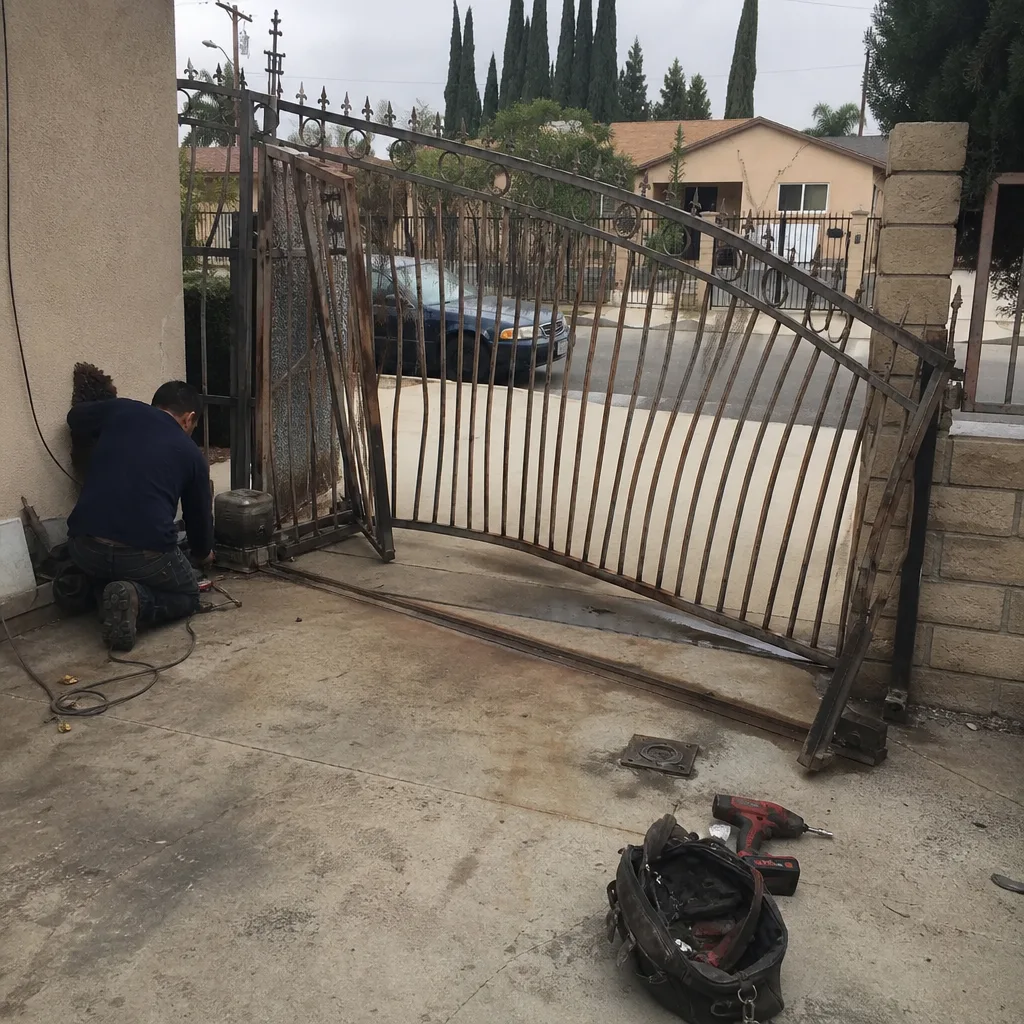 Before
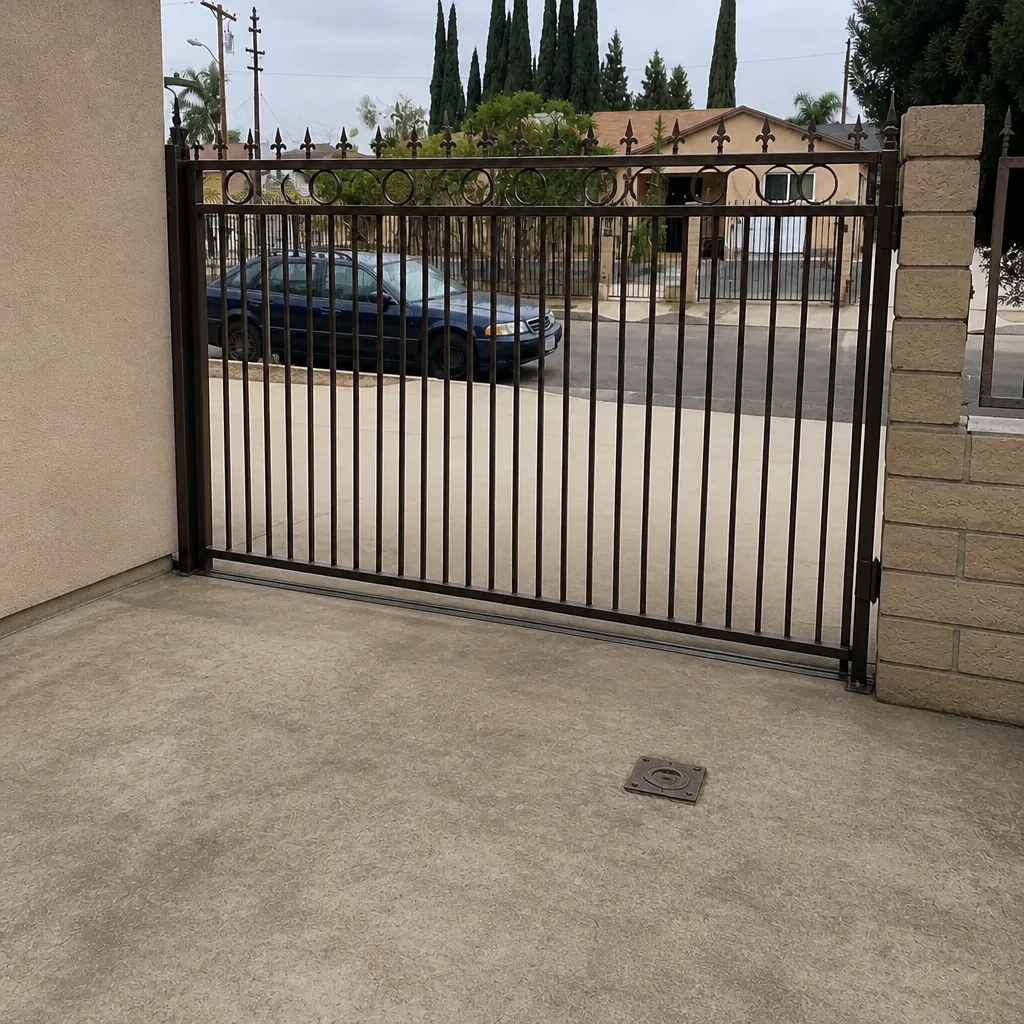 After
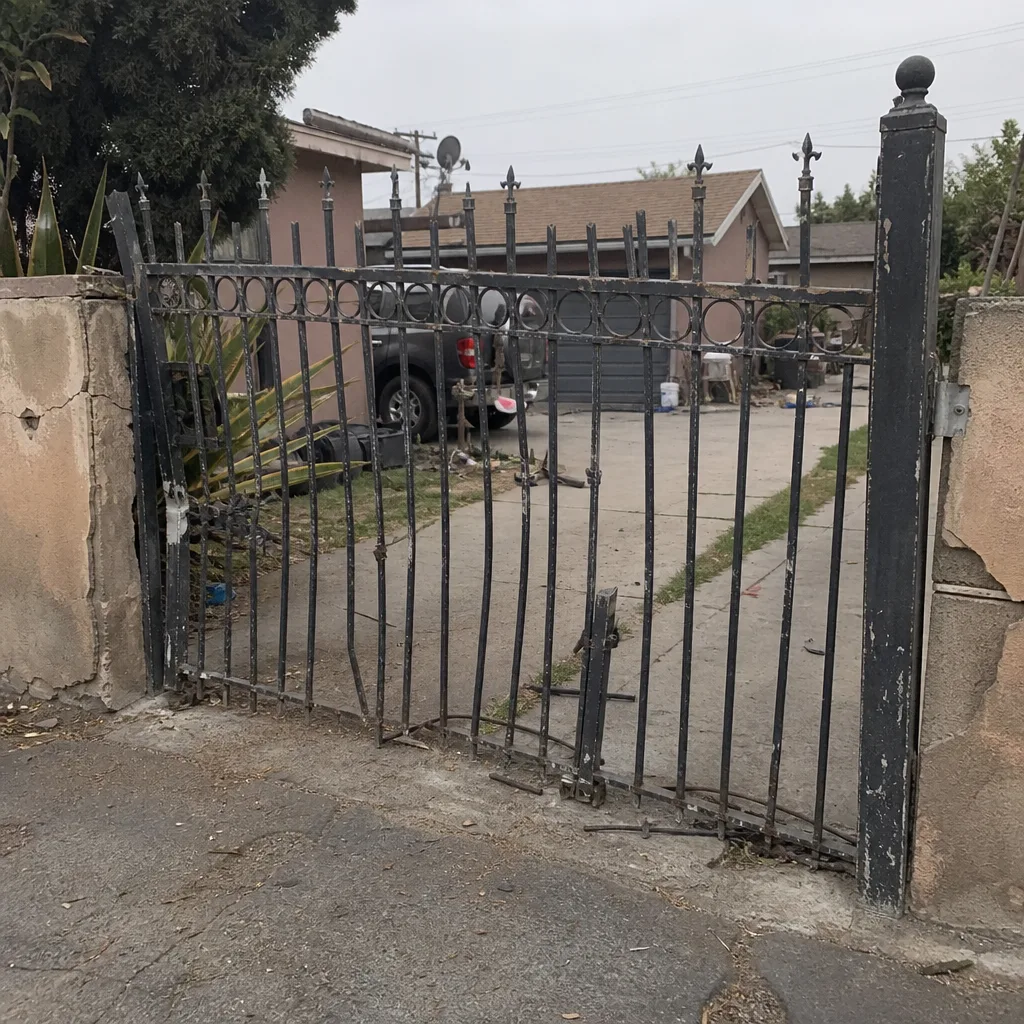 Before
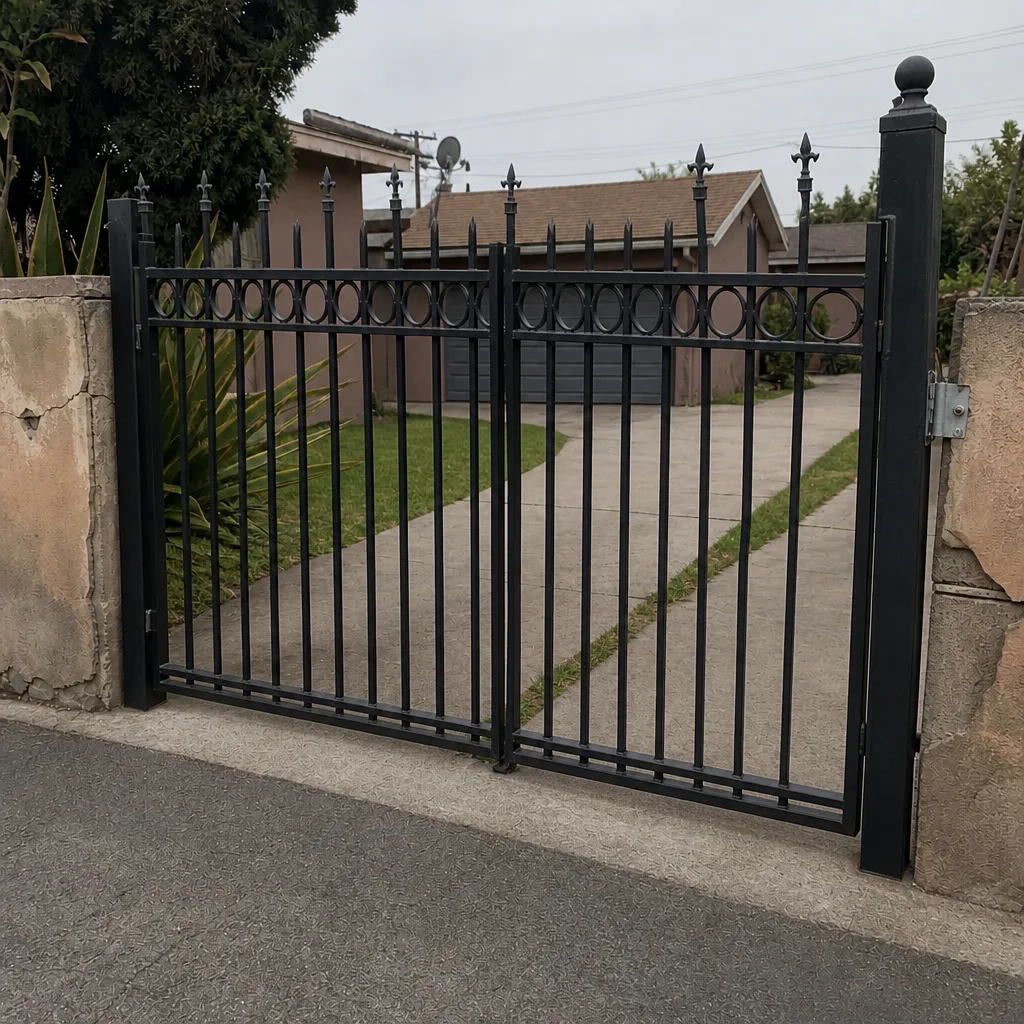 After
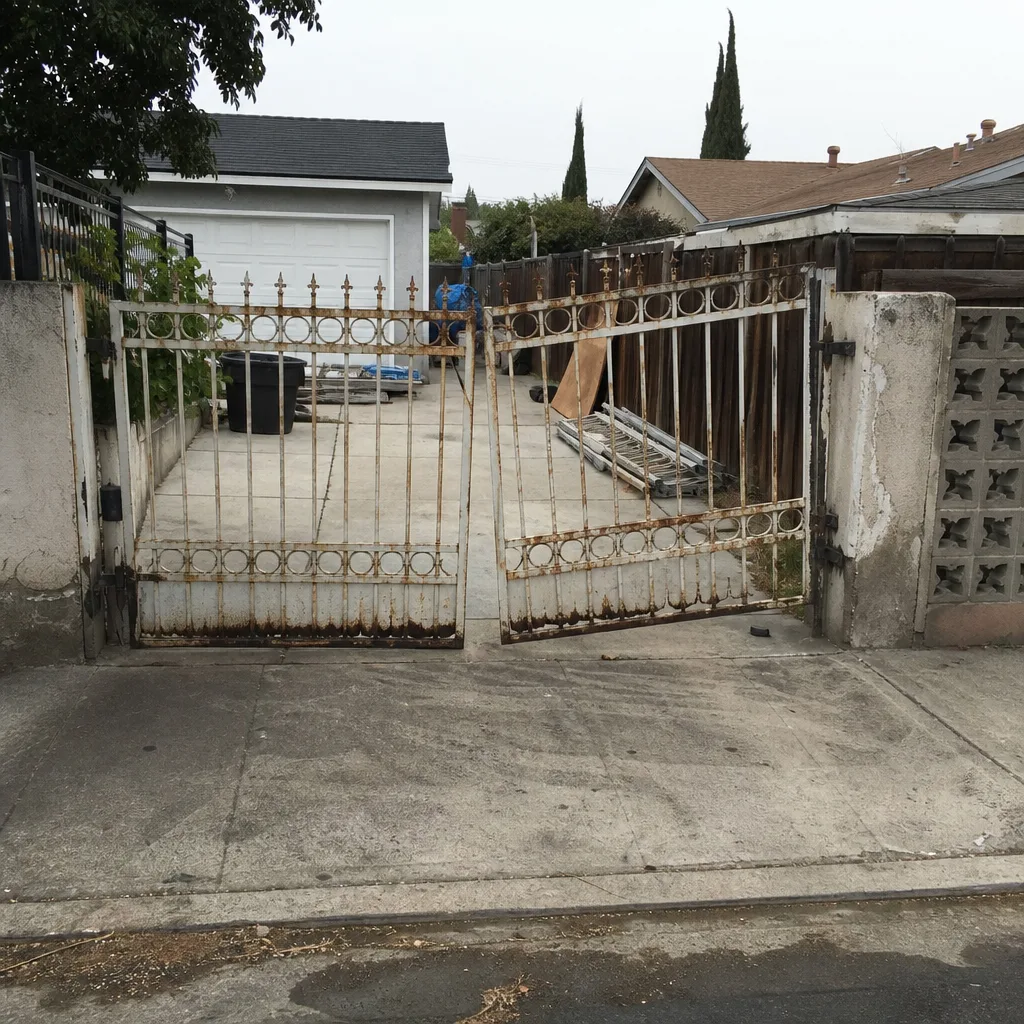 Before
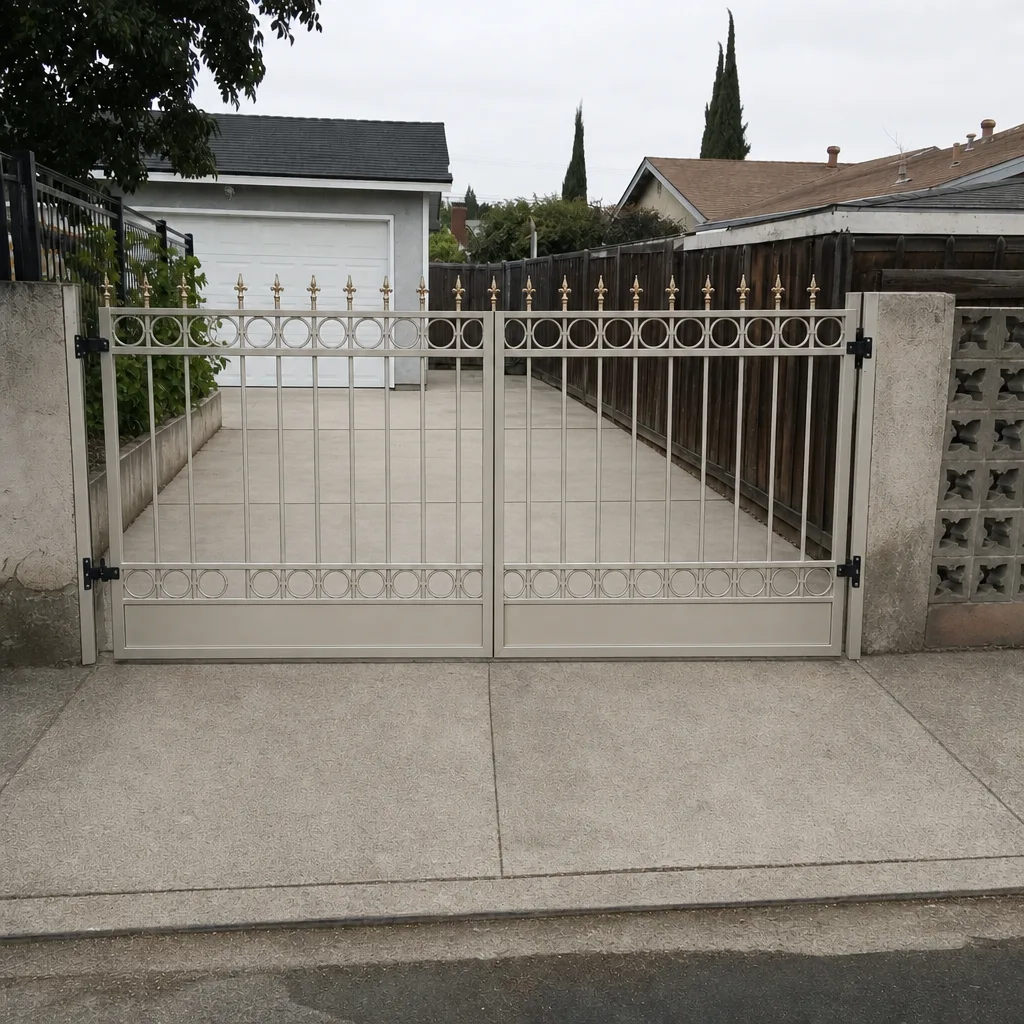 After
When to Call a Professional
If your gate project involves a new operator, new electrical work, new posts, or a gate that’s heavy enough to cause injury if it fails, call a professional. UL 325 compliance isn’t a DIY topic, and the inspection process favors contractors who know what code actually requires. The decision points are specific: an automated gate that stops mid-cycle, a swing gate that binds on a hinge, a slide gate that’s come off its track, an operator that trips a breaker every time it runs. These are jobs where the repair requires brand-specific diagnosis and the safety margin is real. Gate Repair Compton offers free estimates in Compton. Call (866) 569-6161. We answer 24/7. Fast dispatch from 7am to 7pm, Sunday through Friday.
Frequently Asked Questions
Most gate repairs in Compton do not require a permit. Replacing hinges, wheels, track sections, or other existing components is considered maintenance. A permit is required only when the work adds new electrical circuits, sets new posts, or builds a new gate structure.
Yes, if the operator requires a new electrical circuit, which is the case for most first-time automation installs in Compton. Replacing an existing operator on an already-permitted circuit typically does not require a new permit. When in doubt, call the city’s Building and Safety Division before work begins.
UL 325 is the safety standard for automatic gate operators, incorporated into California code. It requires entrapment protection devices, force limiting, and warning signs to prevent injury. Any operator installed in Compton, permitted or not, must comply with UL 325.
Yes. A home inspector during escrow can flag unpermitted electrical work, including a gate operator installed without a permit. That triggers a disclosure obligation and often a retrofit permit and corrections before the sale can close. The same issue can affect an insurance claim if it traces to unpermitted electrical work.
For a simple electrical permit tied to a gate operator, the review in Compton is often completed within a few weeks, depending on current workload at the Building and Safety Division. Structural permits for new gate construction can take longer if plan review is required. A complete application submitted the first time is the fastest path.
The inspector typically checks electrical connections, UL 325 safety devices, warning signage, and any structural work specified on the permit. For slide gates, the receiving post clearance is checked. For swing gates, the hinge and pinch points are reviewed. The inspection verifies that the work matches the permit and meets code.
The Bottom Line
Gate permits in Compton come down to one question: are you adding something new or fixing something that’s already there? Repair of existing components is generally permit-free. New electrical work, new structural posts, and new gate construction generally require one. UL 325 applies to every automated gate regardless of permitting, and skipping it creates a liability that follows the property. The cost of the right permit is modest. The cost of the wrong shortcut is not. When the work is done properly and inspected, the paperwork becomes an asset at sale time, not a problem. Call (866) 569-6161 for a free estimate. We answer 24/7. Fast dispatch from 7am to 7pm, Sunday through Friday.
Written by the team at Gate Repair Compton, serving Compton since 2014.